
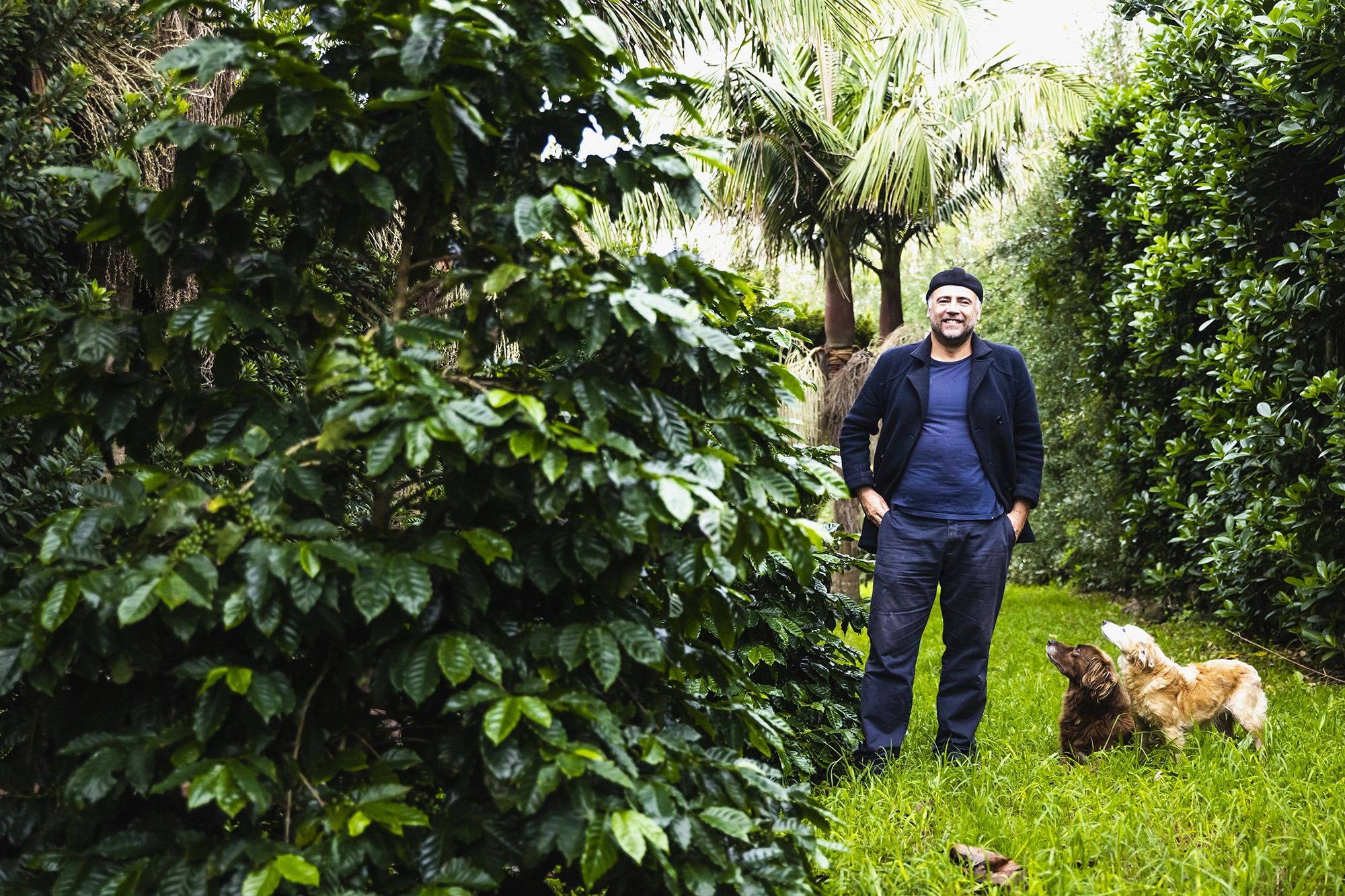
The first Portuguese coffee is grown in the Azores and results from a partnership with local producers and regional institutions.
Report on Terceira Island, where what once seemed almost impossible has become reality.
The history of coffee in the Azores is not linear. Before reaching the Delta The Coffee House Experience stores in Lisbon and Porto, where it is sold under the name The Impossible Coffee, Azorean coffee overcame barriers and opened new horizons.
The exact moment when it was introduced in the archipelago is unknown, but it is estimated that the origin of coffee cultivation dates back to the late eighteenth century. We know this from references to its cultivation found in literature of the time, such as in the work Escavações (1821), in the pamphlet Ensaio sobre a Cultura Preferível para Substituir os Cereais na Ilha de S. Miguel, e os meios de a Promover (1840), or in the periodical O Agricultor Micaelense (1844).
Coffee growing was seen as a curiosity. It served ornamental purposes more than any commercial logic, but there were exceptions. And those had their centre on Terceira Island, where the 12 sacks of coffee came from that reached São Miguel in the summer of 1848, according to the July edition of O Agricultor Micaelense. By comparison, in May 15 sacks had arrived from Pernambuco, in Brazil, then the main coffee exporter to the Azores.
Several plantations appeared on the island in the second half of the 19th century and the beginning of the 20th century, but they have since disappeared. In the 1970s, after 25 de Abril, the Official Agricultural Services launched a campaign to encourage the cultivation of Arabica coffee in the Caturra and Yellow Bourbon varieties, brought from Brazil, which adapted well to this subtropical climate. However, the lack of technical knowledge and of suitable equipment for processing and storage after harvest condemned the campaign to failure.

At the turn of the millennium, several technicians from the Terceira Agricultural Development Service resumed coffee planting, using the island’s most productive “mother plants” as a basis, and then passed them on to farmers and producers interested in the crop.
But first, the technicians carried out an exhaustive survey of the coffee trees on the island. “We can still find some very old specimens on Terceira, approximately 80–90 years old, and some already over a hundred years old. We recorded 213 locations with coffee trees of different types, from new plantations to working farms and abandoned farms, public gardens, private gardens, and so on,” explains Jorge Tiago Martins, one of the technicians who started planting coffee more than 20 years ago.
Jorge grew coffee on the island where he lives, Terceira, but the entire archipelago has potential and small-scale production for local consumption or for creating its own brands. This is the case of Fajã dos Vimes, on the island of São Jorge, where the first coffee plants arrived from Brazil about 200 years ago and where the Nunes families have more than one hectare planted behind their house – these plants descend from those that arrived at the beginning of the 19th century. The annual harvest has given rise to brands aimed mainly at tourists.
From São Miguel comes the example of Pedro Pimentel and Dina Fraga, a couple who always remembered seeing Caturra coffee plants in São Miguel, because the flowers, beautiful, are unforgettable. After deciding to invest in coffee production, they imported seeds, found a nursery grower who taught them how to plant coffee trees and, soon, they will have 9,000 plants producing coffee beans.
The seed took root and, from 2010 onwards, a small group of producers formed Companhia Insulana de Cafés, an organization created to promote coffee cultivation. In 2015, it gave way to Associação de Produtores Açorianos de Café – APAC (https://apac-cafe-dos-acores.negocio.site/), which today has “70 members on eight of the nine islands,” according to Luis Espínola, who chairs the association.
In recent years, together with APAC, the regional government and with support from foreign specialists, Delta Cafés (https://deltacafes.com/) has carried out studies to identify which species would be best suited to the Azorean climate and soil, confirming that there are six Arabica coffee varieties with potential to be produced in the archipelago.
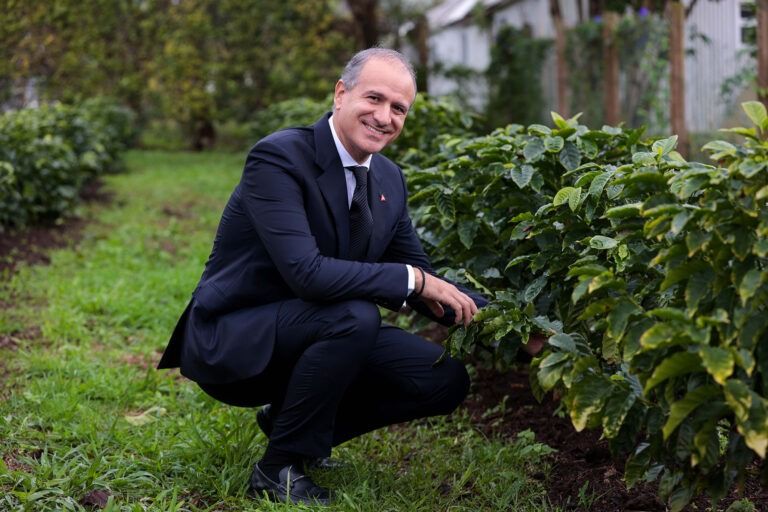
“We have invested in the training and qualification of coffee growers in the Azores, with more than 1,200 hours of field work so far. Over these last years, we have supported more than 80 producers through capacity-building actions and workshop,” says the CEO of Delta Cafés, Rui Miguel Nabeiro. “Thanks to them, coffee production has returned to the archipelago, and many now invest in small-scale coffee production.”
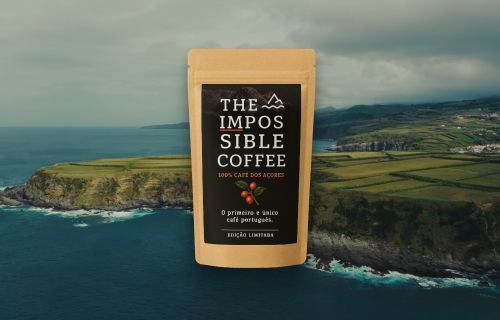
The launch by Grupo Nabeiro (https://gruponabeiro.com/) of The Impossible Coffee, a 100% Azorean coffee blend, marks a clear statement of the project’s quality. “Our coffee is moving from being sold in small-producer batches under their own brands to a stage where it can be tasted alongside other coffees of the highest quality,” says Luís Espínola, president of APAC. “The partnership with Delta Cafés, APAC and the Regional Government of the Azores is essential to provide the tools needed for coffee to become more than a dream, a reality.”

“The most special thing is making the impossible possible”
1. Does presenting a coffee grown in the Azores have any special meaning?
The project itself is inspiring, and the fact that it is in the Azores makes all the difference. There is a set of factors that is hard to explain, but you can feel a deep passion for our ability to produce coffee in Portugal and, in particular, in the Azores, which is the only place in Europe where this is possible. Delta is very proud to present the first Portuguese coffee.
2. That is why the café is called Impossible Coffee?
As one of the largest consumers and a place where coffee culture has been established for a long time, Europe did not produce coffee because the climate was not suitable. That is why we called it Impossible Coffee. Because what matters most is making the impossible possible.
Source
3. How did Delta become involved in this project?
In 2018, Delta joined International Coffee Partners, an association of European family-owned companies in the coffee business, created to support the development of production among smallholder farmers. At that time, we learned that there was an attempt to grow coffee in the Azores. That was when we thought: ‘Why not?’ Why not try to understand whether it is possible to take this step? We did not expect to be the farmers ourselves. What we wanted, and still want, is to inspire families and small producers to believe that it is possible to invest in coffee and make a living from its cultivation.
4. What conditions does this archipelago offer that cannot be found in the rest of Europe?
The Azores have a favourable climate: very humid, with constant rain and mild temperatures. The volcanic soil itself, which we might think could make planting difficult, turns out to have – as we now know, after four years of studies – optimal conditions for producing at least six coffee species. What we will see later is whether we meet this expectation. What we did first was to study in order to gain knowledge. Then we shared this knowledge with the regional government and with apac [association of producers]. Together, we are transforming the present to create a future for coffee growers in the Azores.
5. And how would you describe coffee from the Azores?
It is a specialty coffee, with a very distinctive taste and extremely high quality. Volumes will not be large, but it will be, above all, a very, very good coffee.
There are 6,240 plants from six varieties of the Arabica species under the care of the nurseries of the Agriculture Division of the Terceira Agrarian Development Service. From here, coffee trees are sent to the rest of the archipelago. This is where everything happens.
The most recent survey counted 12,000 Arabica coffee plants, of the Caturra and Yellow Bourbon varieties, on Terceira Island. Of these, around 600 were between 10 and 30 years old, and 300 plants were over 30 years old (including some that are over a century old), with production levels considered excellent. As for productive coffee trees, the Terceira Agricultural Development Service estimates there are around 4,500, that is, plants more than three years old – the remaining plants are younger.
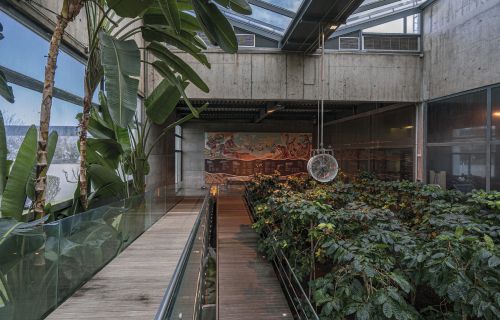
So that producers do not waste time and resources on plants that end up not developing or not producing what is expected of them, the Agriculture Division of the Agricultural Development Service of Terceira created a coffee tree nursery. This support structure for coffee production is a kind of daycare where 6,240 “babies” – from six varieties of the Arabica species – are under the care of Jorge Azevedo, the agronomist responsible for the project.
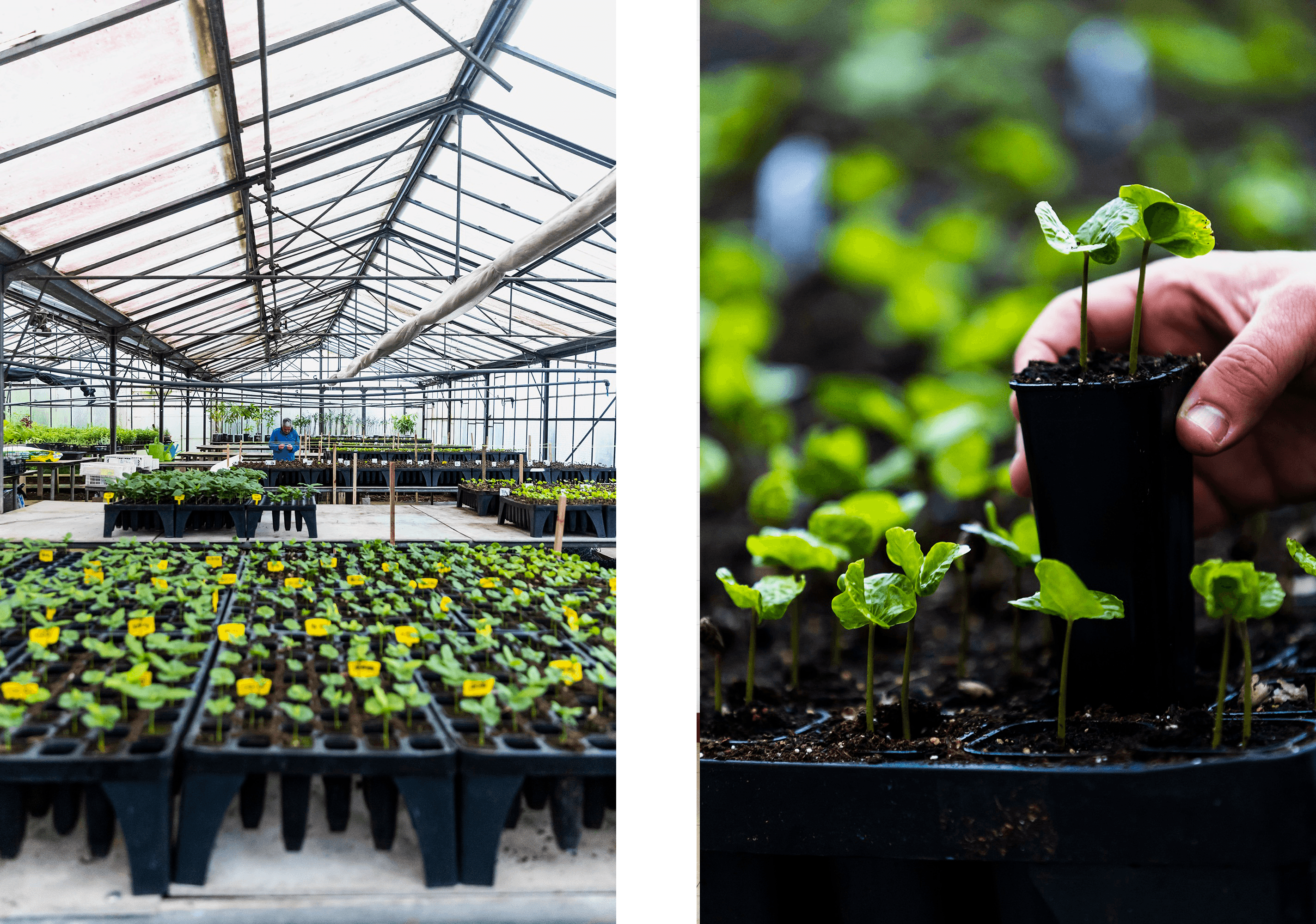
From this nursery on Terceira, between 4,000 and 5,000 coffee plants are sent out every year to be grown on the other islands of the archipelago. They are “mother plants”, the result of genetic improvement carried out by the team led by Jorge Azevedo. They are accompanied by technical advice, collection of soil samples from the plots where they will be planted, as well as guidance on fertility, installation and planning of new plantations, crop management, and post-harvest treatment.
“We are developing six new Arabica varieties and comparing them with the two reference ones,” says Jorge, referring to Caturra and Yellow Bourbon, the two varieties that have dominated the coffee landscape of the Azores since the eighteenth century. The aim is to understand whether they perform well in this climate andterroir“We observe their agronomic adaptation: resistance to cold, to dryness, whether ripening is uniform, resistance to diseases, and whether they have higher productivity.” If coffee production in the Azores is already going well, expectations for the future are even brighter.
Jorge Tiago Martins, the engineer
Jorge Tiago Martins is an agronomist and is part of the technical team of the Serviço de Desenvolvimento Agrário da Terceira, which more than 20 years ago had the idea of restoring coffee cultivation. They decided to do this because it was a crop that already existed on the island, but production was very disorganized. “People grew coffee for their own consumption or kept the plants to decorate their land, because the trees have very striking, very vivid green foliage,” he explains.
“Production is now more organised,” he notes. “Some producers have small brands of their own, and then there are those who produce but are not interested in creating brands,” says Jorge, who belongs to this group. The agronomist starts the harvest at the end of May, beginning of June. All production follows organic farming, with coffee plants growing alongside other fruit trees typical of subtropical climates, such as citrus, avocados, guava and passion fruit.
Part of what he harvests stays on his farm on the outskirts of Angra do Heroísmo (“here in this area you find several farms with century‑old coffee plants,” he notes), where it will be served at breakfast over the following months; the rest is sold to another producer on the island who, in this case, has a brand and then markets it – that is the part of the process that does not interest him at all.
“I believe the path for coffee in the Azores is as a selection coffee. In terms of volume, we cannot compete with countries like Brazil.”
“Coffee does not tolerate temperatures below 5 or 6 degrees Celsius, and we do not have that in the islands,” says Jorge. “It is not enough to have hot summers; the minimum temperatures must stay above 10 degrees, and that does not happen on the mainland.” This climate is not exclusive to the Azores, which is why Madeira and the Canary Islands also have coffee plants.
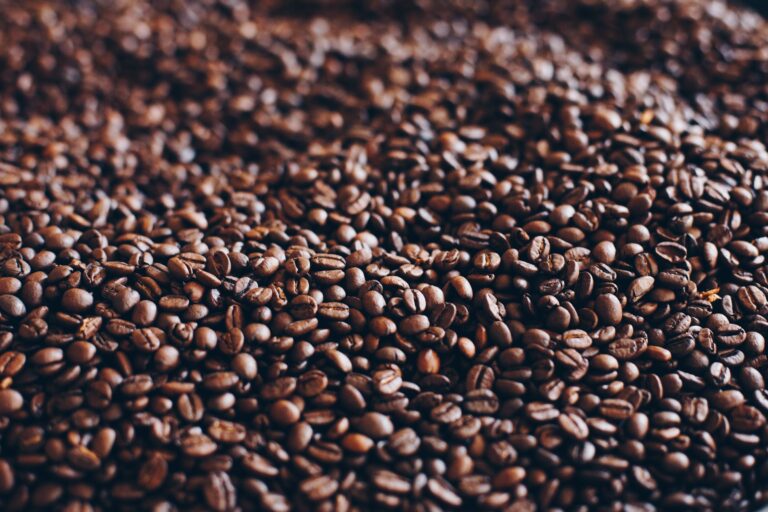
Each mature Arabica coffee tree that Jorge has scattered across the land around his house – mixed with other fruit trees and sheltered from the wind behind hedges – produces between 900 and 1,200 grams of green beans, which are ready for roasting. “That is five times less than the fruit,” he notes, before showing why he has to pick five kilos of coffee cherries to obtain one kilo of green coffee. “After we pick the ripe fruit, we let it dry, we peel it down to the pulp as if it were a cherry, and we take the seed, which is the bean.”
Jorge believes that better organization is also visible in technical support during cultivation and post-harvest. “It is essential,” he states. “It is a process that can ruin a good coffee. The coffee can be good, from good plants and with good yields, but poor handling after harvest – from drying to pulping, from roasting to storage – can spoil all the coffee.” This means, in the view of this agronomist, that “around 80% of the conditions needed to produce a good coffee are linked to post-harvest.”
With good storage conditions, green coffee keeps for up to one year. “In a good warehouse, with controlled temperature and humidity, and no sources of contamination, coffee can keep for a very long time.” Once it is roasted, it must then be sold as quickly as possible so it does not lose its freshness. “It is different from the fresh fruit business,” he says – and, in case there was any doubt, yes, coffee is a fruit and its plant, the coffee tree, is a fruit tree.
José Gabriel Ferreira, the American
The café began 12 years ago as a pastime for this former emigrant to the United States. “A hobby,” as José Gabriel Ferreira explains, in immaculate American-accented speech. “One day when I went to São Jorge, a friend of mine who had coffee trees that were 70 and 80 years old asked me why I did not take coffee back to Terceira.” José Gabriel replied that he knew little about the subject, and his friend answered that he would teach him.
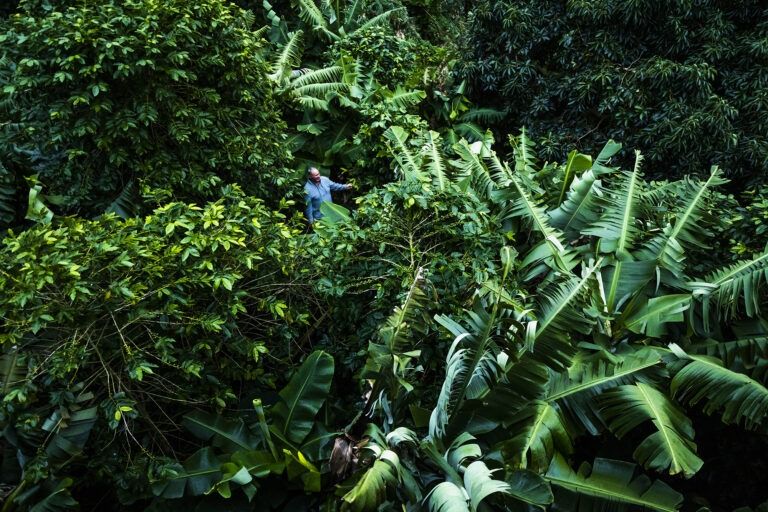
When he returned home, he planted the trees. Some took root, others did not. “If I knew then what I know now, I would have planted more and today I would have a larger yield. This year I only produced 80 kilos, which is little. It is not enough to be able to sell outside,” he laments.
"I have 10 alqueires of land [about one and a half hectares]. I am using six for coffee and I have 1,500 trees planted." The youngest are two years old. By his calculations, when all of them are producing, he will have around one and a half tonnes to harvest each year. "Then I will already have a strong level of production."
The plantation is in São Bento, in the southern part of Terceira, a little above Angra do Heroísmo, which from the property looks splendid, with the sea in the background. “I am inside the city and, at the same time, I am outside it. There is no Azores coffee with a better view than this.”
In the first year, the coffee tree produces little. Only after three years does it begin to work at cruising speed. A further three years of experience are added to check the quality of this work, as well as the quantity that results from it. “If a tree does not produce at least 15 kilos, it is no longer a good tree. Because it works at a ratio of five to one,” says 63‑year‑old José Gabriel Ferreira. “You pick five kilos of fruit to get one kilo of coffee. And after roasting it loses another 20%. Imagine: you pick 15 kilos of coffee fruit and you end up with 2.4 kilos of clean coffee. You need a big tree.”
Like so many Azoreans before him, José emigrated to the United States. He went to the city of San José, in California, at the age of 20, in 1980, to build bathrooms, and returned to the island 18 years later. “I put in my retirement time and came back to my homeland. Today, this plot already gives me enough work to keep me busy all day.”
He works in agriculture full time and, two years ago, he began selling roasted coffee to tourists. He roasts the coffee in a micro-roastery at apac’s headquarters, with a capacity of one kilo. Before, he produced only for his own consumption. In truth, with a total production of 80 kilos last year, there is not much to sell. This situation will change soon and, José Gabriel Ferreira hopes, with the help of Delta. “Why? Because, in the future, Delta will be good for the Azores. When we are producing 10 or 15 tonnes, who are we going to sell to?”
José never speaks of just one island. He always refers to the group of all nine, to the archipelago. “In the Azores, we are now starting to produce six new coffee varieties. We are trying to understand which one is best for the islands. We know that Yellow Bourbon and Caturra do well here.”
The worst enemy of coffee is the wind. For this reason, José – like the other coffee producers – plants tall hedges to break the wind and protect the coffee trees. “Many trees do not grow any further because of the gusts of wind. The tree we like is low, but has wide branches. Those are the good ones. They will never grow very tall, but they will be good production trees.” When the plant reaches the height of an average man, José tops it so that it starts to grow sideways and not upwards.