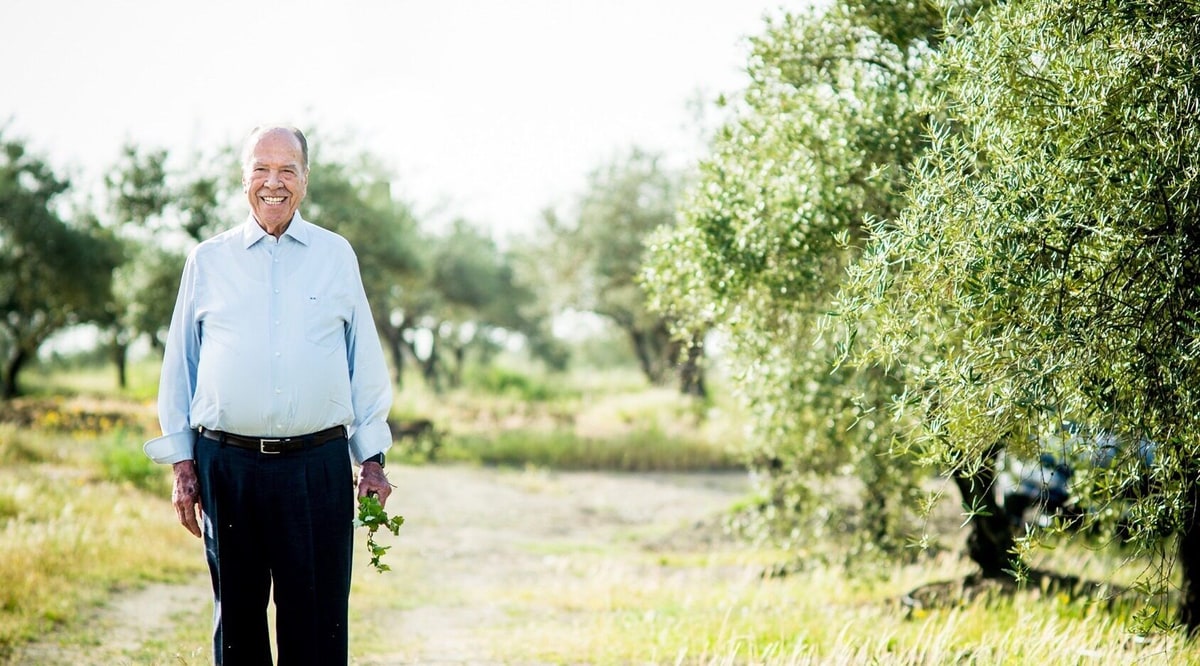
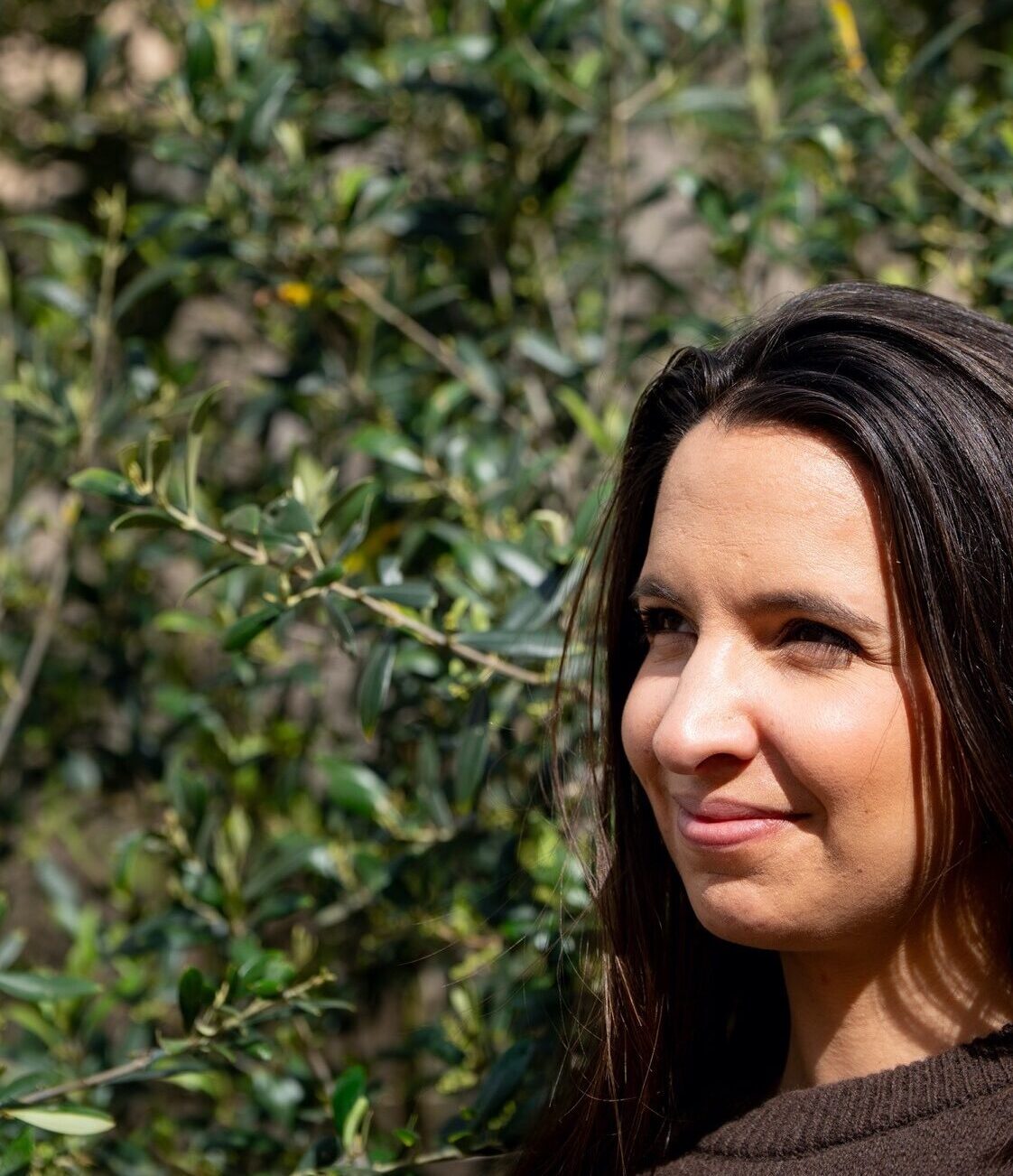
Can our individual choices really have the power to transform the world? In a society of consumption and waste, some people choose a different path, more conscious and responsible. With more than 110,000 followers on social media, Catarina Barreiros turns concerns into actions and problems into solutions, inspiring us to rethink habits and make more sustainable choices through the Do Zero project, which grew from a single Instagram page into a website, a podcast, an ecological store, and even an event that attracted 30,000 people. Accessible and engaging, sharp but never arrogant and always with a smile, Catarina welcomed Rita Nabeiro into her home for an open conversation that reinforces how small gestures can have a huge impact on the planet.
Video
Catarina Barreiros
You trained in architecture and hold a master’s degree in management. You worked in fashion and digital marketing, but it was in sustainability that you discovered your mission: helping people and companies adopt more ecological and intelligent practices. What first awakened your environmental awareness?
It is very hard to answer, because we always look back, trying to understand which things shaped us, but I am still too close to the starting point to see exactly what. Many factors played a role. First of all, my family. I am the daughter of two teachers. I have a brother with cerebral palsy, and my parents always made us believe that we must stand up for people who face more challenges in life than we do. “The world does not owe you anything; with your privilege, you must do something,” they told us. Then I had a grandmother in Fundão, who always kept her vegetable garden. She washed the plastic shopping bags and hung them out to dry. At that time, you did not pay for them. She said they had not cost her money, but they had cost someone something. My grandmother always made full use of food. She lived a simpler life and, with only primary school, she was still one of the most intelligent women I knew. I always felt very close to that way of being. Then life unfolded.
You were a Girl Scout.
What made me really enjoy the outdoors, nature, and the philosophy of leaving the world better than we found it, shaped my principles. Along the way, I met people who inspired me. My husband, for example, was very curious about injustices and made me think. It was very interesting when we met, because he really made me reflect. Later, I had a high-risk pregnancy. Being a mother, in itself, already leads us to think about what future we want to leave to our children. But with a high-risk pregnancy, I had a great deal of time to think about it. So I began to want to find out more and read everything I could.
Source DDD
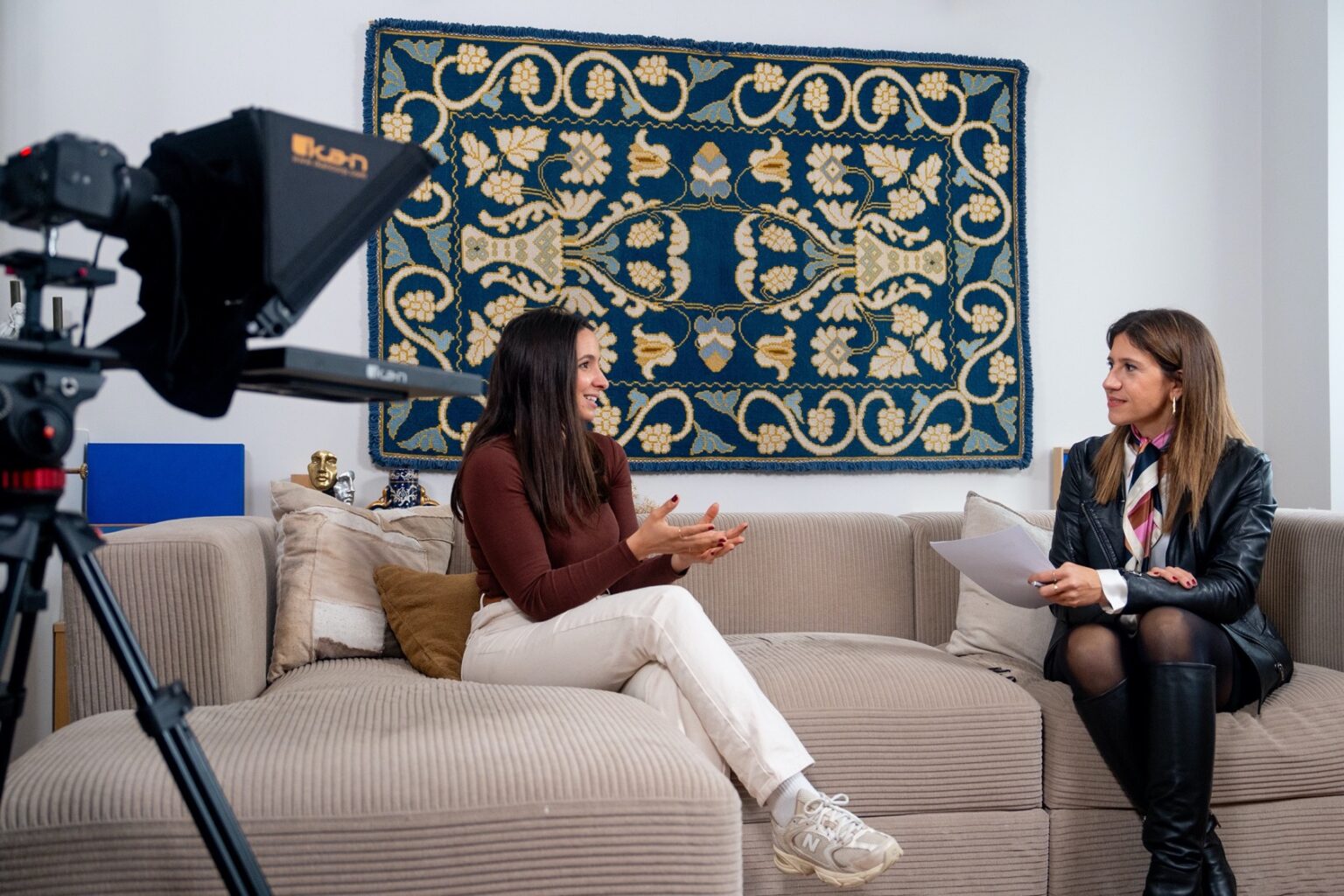
And here, in this room, I see a harp and a piano, as well as shelves full of books. Does this diversity of interests enrich the way you think?
I think everything we do shapes us, for better and for worse. It is funny because my architecture thesis was about social housing, and in management I wrote a thesis on luxury consumption. They are very different worlds. I have always liked to get to know realities that are diametrically opposed. Music, art, and reading have always been my escapes. In some way, I found in art the balance for the confusion in my brain. I do many things, not all of them well. I am always unsure about the world and I need the space that music gives me. A few years ago, I had a burnout. I was in a very bad state and the psychologist asked me what I used to do as a little girl when I wanted to be happy – I would go to the piano. That was what saved me. As I was self‑employed, it was not as if I could stop.
How old were you?
I had burnout three years ago, when I was 29. When my daughter, who started playing the piano this year, sometimes says she does not want to practise, I tell her that music, in this house, is like Portuguese or mathematics: it is something you do. Some subjects teach you logical thinking, others teach you to speak properly and to know your culture, but music is an escape for when the world is in a bad place. I tell her that one day she will understand. And I thank my parents every day for enrolling me in music.
You worked in fashion and digital marketing, and I heard in an interview that you were a bit of a consumerist…
It was not just a little. It was a lot.
How do you go from one extreme to the other?
I believe we need to know ourselves very well to understand what to do with our lives. I did, in fact, work in luxury fashion, but not with luxury salaries. And because I started working very early, at 18 I was living with my parents but I was already earning money. And what did I spend it on? Clothes. At a certain point, my husband told me he did not understand. That I was a person so concerned about injustice and then I bought fast fashion produced by child slaves on the other side of the world. In fact, I was not being very consistent. At the time, the Do Zero (https://dozero.pt/) project was not yet up and running, but I think that was the first click. This does not mean we need to be extremists. It is possible to find balance. But I know myself. I know I had to be all or nothing. It had to be a radical change. And the truth is that, six years later, it no longer costs me anything at all. But at the time it was a difficult decision.
Your words and your attitude are very consistent. Do you feel you are an activist in the full sense of the word?
Yes and no. On the one hand, yes, because I do vocal work for a better future. I draw attention to issues that are sometimes even painful. On the other hand, you will not find me out on the street at a demonstration. I hate crowds of people. It is not my space, I cannot shout louder. I prefer dialogue, although demonstrations are also necessary. Even though I work with social media, I do not enjoy having too much exposure and having my life completely laid bare. So I try not to shout too much.
“Because sustainability is not about what we cannot do. It is about the opportunities that open up when we think about what we want from life. A life in community, oriented towards happiness.”
When I interviewed Bumba na Fofinha, she said that once someone told her, about a post with 100,000 likes, that it was almost like filling two Estádio da Luz. That is also the number of people who follow you. You have a voice that reaches many people who like you, but since you deal with polarising topics, I ask: do you also receive opposite reactions?
É impossível estar nas redes sociais sem ter exposição a comentários menos simpáticos. Lido com isso melhor ou pior consoante a minha filha me deixar dormir de noite. Há dias em que só me apetece desistir. Ainda há pouco tempo tive um vídeo que se tornou viral, que é o pior que me podem fazer. Sim, é giro porque a mensagem chega a muita gente, mas vêm muitas pessoas que não nos conhecem e que têm esse vídeo como primeira impressão. Mas não fazem, na verdade, ideia de quem sou, ao contrário da maioria das mais de 100 mil pessoas que me seguem, que já viram vários vídeos meus, que se identificam comigo e, por isso, se mantêm na comunidade. Ou então não se identificam e não ficam, e está certo, porque não temos todos de gostar do mesmo. E se a seguir fizer um post que vai contra o que pensam de mim, vão dizer que defraudei as suas expectativas. Isso é um pouco difícil de gerir.
Do you have stories of people who changed their lives that you can share?
I was told that a girl was thinking of studying management, but decided to go into environmental engineering instead. In other words, she decided her life based on what she saw in my videos. It is a big responsibility. I also know of a family who went to live in the countryside. They told me that after seeing me so many times talking about Fundão and Alentejo and about living in a calmer way, they dropped everything and went. And many people started living without a car, which is very difficult in Portuguese culture.
Do you live without a car?
Yes, because I live in Lisbon. In Alentejo it would not work. There is a lack of connectivity between cities, though not so much in Greater Lisbon. In areas with access to the Metro, it is very simple to live without a car. I take my daughter to school by bicycle. It takes eight minutes. By bus or metro it takes me 20 minutes at most. On foot, it would be 45, so it is not that close. The other day, we went to a show by bus. Afterwards we wanted to go for lunch in a part of the city where parking is difficult. If we had gone by car, we probably would not have gone to that restaurant. Not having a car gives us freedom. It is a conceptual change. And if we need one, we borrow a car from my father or my parents-in-law. It is not that I never set foot in a car.
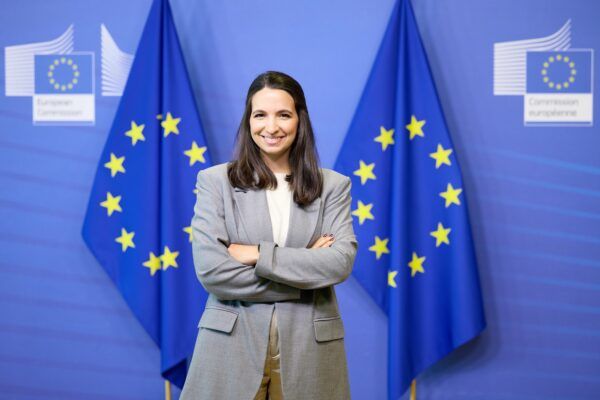
Returning to the Do Zero project, what began as an Instagram page is now a complete ecosystem. How did all this happen?
Somewhat by chance. While I was at home on sick leave and had plenty of time to read scientific articles on sustainability, I started to show what I was doing to my friends through social media.
Do you remember your first post?
Exactly. I had done my first bulk shopping and made a post saying that I was going to change my life, that I was going to start living in a calmer and more sustainable way. That day was marked forever, because after publishing the post I found out that my best childhood friend had died. Sustainability helped me in a difficult moment. It gave me something to hold on to.
What do you say to people who feel that being sustainable is difficult or expensive? What advice would you give to someone who wants to start, but does not know how?
It depends on the person’s situation. While it is true that some products are more expensive, it is also true that, overall, you save a lot of money. By not having a car, you save. But if, for a family, that is not viable – for example, for my parents, who have my brother in a wheelchair – we need to understand our own dynamics and what works for us. The idea is not to have a sustainable lifestyle that creates discomfort and takes away our joy of living; it is to feel well and to realise that there are simple things we can do, such as starting to include one plant-based meal per week, or using a solid shampoo instead of a liquid one. With small achievements we begin to feel that we can do something, that we have a voice. This does not mean we have to do everything. I do not do everything. There are things I should do, but they do not fit into my life. It is important not to judge others or ourselves, because we are part of a complex system. We are one cog in the mechanism, but we are not the only one. We need change that happens gradually.
And what simple advice would you give people to start putting into practice in their lives which, if everyone followed, would have a huge impact on the planet?
I usually share tips that deliver maximum impact with minimum effort. The first advice I give to anyone who wants to do something that is easy, that protects the environment and also saves money, is to look at food waste. For example, over the course of a week, weigh all the food that is thrown away, from peels to leftovers. And try to reduce that waste from week to week. Food waste is one of the main – and controllable – causes of greenhouse gas emissions, due to pesticides, the transport of goods, the refrigeration of food, and the processing it undergoes. All of this generates waste.
What is the second piece of advice?
The second point is to follow a plant-based diet. Saying this can sometimes be alarming, but no one is saying we all have to be vegan to save the planet. That is not the issue. It is a diet in line with the traditional Mediterranean pattern, where the plate is mainly made up of plant-based foods. This includes vegetables, oilseeds [nuts], and carbohydrates. All of these should be predominant on the plate, not only for environmental reasons, but also for health. Whenever we try to eat in step with the seasons and with what the land provides, we are also doing something good for ourselves.
When you see people with responsibilities setting the wrong example, political leaders questioning science, how does that make you feel?
The first reaction is despair. What am I doing here when the leader of the world’s largest power questions whether greenhouse gases are really that harmful? It is a historic step backwards and it is very draining. I try to draw inspiration from people who have been doing this for decades and have not given up, such as Professor Júlia Seixas and researcher João Pedro Gouveia. So who am I to be tired after six years working on this? We must not lose our course: we want to continue to exist as a civilization. The continuity of the planet is not at stake; what is at stake is our own continuity. How do we want to live: with masks and in bunkers or walking in nature, picking wild fruit and dipping our feet in a stream?
Do you think companies are already committed to change or are they still more focused on “greenwashing” and creating an appearance of sustainability?
It depends greatly on who is leading the companies. Today, it is easy to send out messages that mean nothing, especially to a less informed public. But as people become better informed, that becomes harder. And it is not in the companies’ interest to be caught off guard. There is much more care about what is said today than five years ago. And I believe companies have a truly transformative role in society. When a large company changes something, it changes it on a much larger scale than a small one. It is always more beneficial to think about what can be done rather than what is not being done. It is already becoming clear that it is necessary to ensure that companies are transparent about the process.
The word “sustainable” is one of those buzzwords that covers many different meanings. Do you feel that, from being used so often, it is starting to lose its importance? For you, what does it mean “to be sustainable”?
It has its meaning. It is everything we manage to do that can hold up. But, when it comes to marketing, it leaves room for interpretation. I prefer to think in terms of “more sustainable than”. Because one thing, on its own, is not sustainable. It always depends on several factors. Let us look at bamboo toothbrushes. They are sustainable, but for whom? My house has mould. If I had a bamboo toothbrush, I would have to replace it every three days. Would that be more sustainable? The bamboo comes from China, where forest policies in terms of environmental certifications are still not spectacular, and then it has to come from the other side of the world. Is it really the best option for me?
As an entrepreneur, has it been difficult for you to find a balance between communicating sustainability and the need for Do Zero, as a company, to generate profit? Does it cause you any crises of conscience?
Constantly. João, who is my husband and our in‑house finance person, is always saying, “Catarina, the house has to be paid for.” He is right. We can pay people who work with us fairly and respect our suppliers, but at the end of the day I need to have a salary, otherwise I cannot live. No matter how much goodwill I have, if I have to find another job on the side, I will no longer have time to continue doing what I do. That was a hard realisation for me. But Do Zero was never a project to make a profit, unlike Norm (https://dozero.pt/). What I believe, as an entrepreneur, is that we must have profit, but not in everything we do. This has been a learning process, and it helps me feel that life will find its order, that if one day we have less, we have less; that if everything goes wrong, we move to a smaller home. Professionally, I am ambitious. But I am not greedy. An extra 500 or 1000 euros will not make me happy. What makes me happy is having time to go to Fundão or to welcome friends for dinner at home.
You were talking about Norm, your new project.
It is an underwear brand for menstruation or for light urinary leakage that I started with two partners in November 2023. It is a reusable product that is very useful for most women. It has been interesting because, in addition to having partners, we are managing factories. And we do not take profits; instead, we reinvest in the company. We have also realised that if the company does not make a profit, it cannot innovate. That was a very recent lesson. If we did not have enough margin on what we sell, we would not be able to move forward with the new product we are about to launch: swimsuits and bikinis with the same purpose. Companies that do not have the financial reserves to withstand the product development period before launch will struggle to survive in the market over the long term.
"The continuity of the planet is not at stake; what is at stake is our own continuity. How do we want to live: with masks and in bunkers, or walking in nature, picking wild fruit, and dipping our feet in a stream?"
Do Zero is a project that you share with your husband, João Barreiros, with whom you also created “a cidade do zero”, an event that has grown from year to year. What does it consist of, exactly?
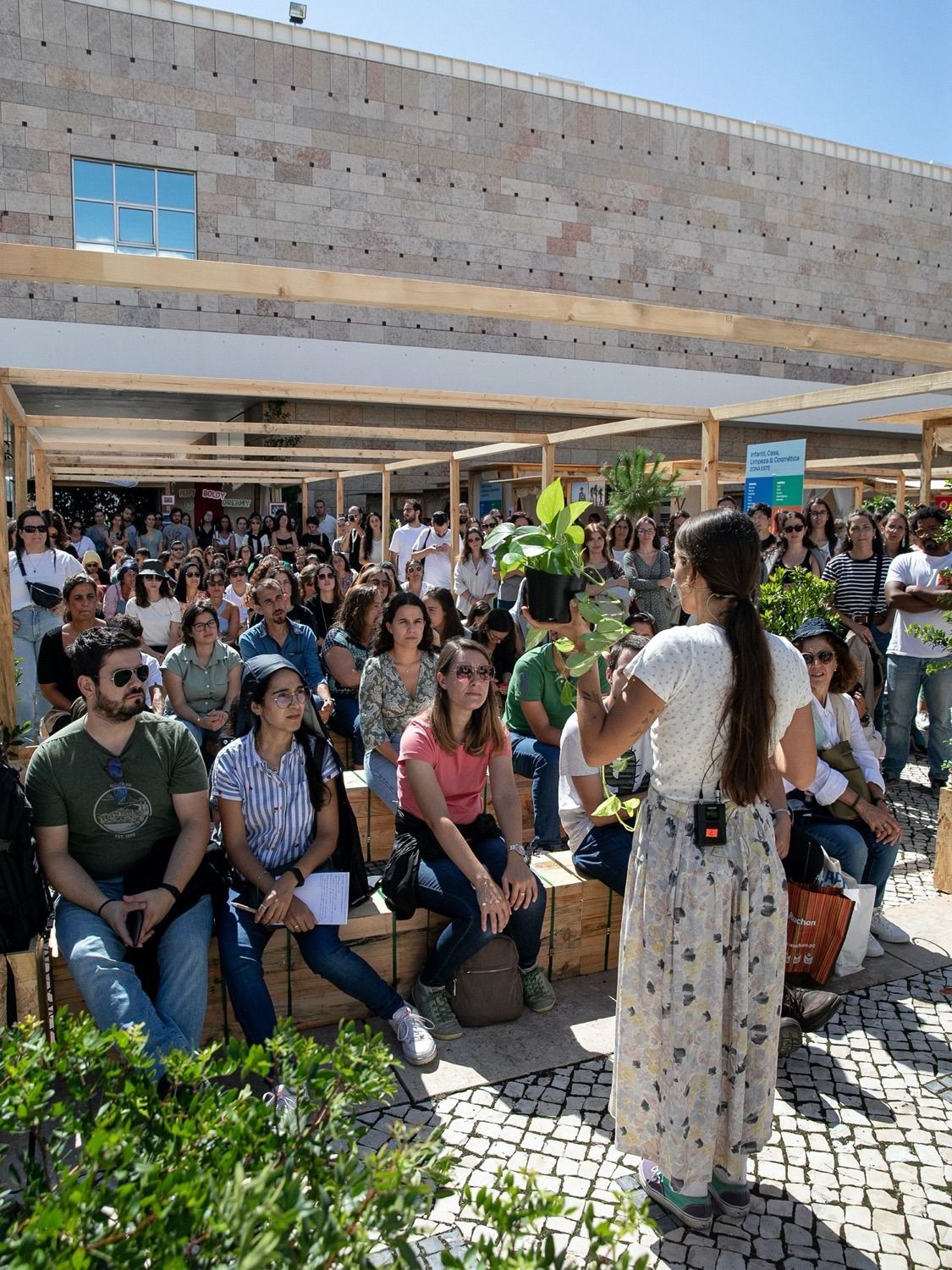
It was a project that came after the pandemic, in which we wanted to create an ecosystem where people could learn about sustainability. A supermarket with only responsible brands does not exist. Most people do not have access to scientists, researchers, and political figures, but I do. So we wanted to create an immersive experience of what it would be like to live in a more sustainable city. This implies free access to education, to transport, and that the brands around us commit to circular economy. Everything had to be designed so that we could live an experience of what could be, which is not yet, but which, at the same time, was already happening in Portugal, because the scientists we brought were Portuguese. In the first edition we had 50 talks and activities. We showed things as practical as repairing shoes or making soap. Practical and theoretical activities so that people could feel empowered for sustainability.
It was a success.
Yes, and the project grew. The first edition was at Pavilhão do Conhecimento. The second, at Centro Cultural de Belém. The third, at Instituto Superior de Agronomia, where Grupo Nabeiro was strongly present, with Delta, Adega Mayor and Why Not. And we managed to bring thousands of people to a place where cars were not allowed. Because sustainability is not about what we cannot do. It is about the opportunities that open up when we think about what we want from life. A life in community, oriented towards happiness – and happiness will not be tucked away in a shopping centre on a Saturday afternoon. Happiness is what we can share in common.
This theme creates room for innovation, but perhaps some companies see it as a problem. What do you have to say about these challenges that can be seen as obstacles?
That is exactly the point. I believe these can be opportunities. It is very difficult for sustainability not to pay off for a company. When we talk about saving resources, we talk about saving money. That alone is already a benefit. Companies that see challenges as opportunities for innovation and development are prepared not only for sustainability but for any challenge that follows. They are resilient. Flexible.
You are part of the think tank O Futuro Já Começou, which meets regularly with the President of the Republic. If you were prime minister, what would be your first measures?
I have no intention of going into politics, but I have already put together an electoral programme for a shadow list for the last European elections, and I had the opportunity to sit next to specialists and debate what I would do. About O Futuro Já Começou, I cannot say much, but I can say that I have brought the decentralisation of energy production to the reflection group many times. Portugal is the second country in Europe with the greatest capacity for decentralised solar energy production. This means we can produce it on rooftops, in car parks. There is no need to clear thousands of cork oaks to build a solar park. To give a sense of how viable this would be, 50% of the energy in Portugal could come from there. Then we still have centralised solar energy, offshore wind, onshore wind… We can very clearly make our country an example in the use of renewable energy. Another crucial topic is the development of the railway. It is unbelievable that we do not have a connection to the European capitals. We do not even have it between Lisbon and all the district capitals. It is a nameless stupidity, because from the moment I solve the railway, I can even mitigate the housing crisis. In the last 20 years we have seen railway stations shut down, when we should have done the opposite. João and I have just taken a 10‑day trip through Europe in which we did everything by train, except entering and leaving Portugal.
How do you manage your schedule, with so many projects and motherhood?
I am very fortunate because I live in a 21st‑century relationship. João and I are parents in equal measure. Sometimes he is more present, other times I am, but there is one very deliberate choice in our life: family is the priority. Everything else comes after. If Graça needs us, whatever I have to do that day, including meetings with the President of the Republic, will not happen. I know this is an enormous privilege. I do not accept working at the weekend. My father has always been self‑employed, he is a lawyer, and I feel that he regrets the time he did not spend with us. I see the dedication he has for his grandchildren. I have never asked him about this, because I do not want to hurt him, but if I asked him what his greatest regret is, he would probably say it was not seeing us for weeks on end because he was working. We are also fortunate to have a large support network, with very available grandparents and friends who are family.
And how do you imagine your future? What impact would you like these projects to have?
I would like to internationalise Norm so that, in a few years, it is a well-established brand. Also because we produce in Portugal and we see the factory facing greater and greater difficulties, as almost all production moves outside Europe because it is cheaper. And it is an outstanding factory, with a nursery for employees’ children. I would like to see it grow with us. To generate profit, yes, but done properly. As for Do Zero, I hope it will no longer be necessary to keep talking about these issues. I hope that in a few years I can look back and think: ‘Wow, remember when I had to explain to people the environmental impact of using cleaning cloths instead of kitchen paper?’
Oh toilet paper!
Now they really are going to say I’m crazy. (laughter)
I was going to ask you that anyway. (laughter)
Basically, toilet paper uses a huge amount of water to produce. It takes 140 litres per roll. In Portugal, per person, according to PORDATA, we use 2.3 to 2.4 rolls per week. That means around 300 litres of water. Using a bidet, which is more hygienic, uses much less water. Of course, I always keep paper at home for guests. When people tell me it is disgusting that I do not use toilet paper at home, I answer that I do not shower in paper: I shower in water.
To conclude, what is your greatest dream?
When I think about where I want to be 20 years from now, I want to be in silence, sitting on the porch of my country house, a small house so it is not hard to clean. I want to have a book on the bedside table, a glass of wine, and I want to simply listen to the birds and watch my chickens run from one side to the other. I want my dog at my feet and my husband by my side reading a book, and if I feel like it, I get up, go to the room to paint or play the piano and, suddenly, children come in and they are my grandchildren and we prepare a big family lunch. That is my life dream. To have a peaceful, happy, and calm life.