1. A heart called Delta
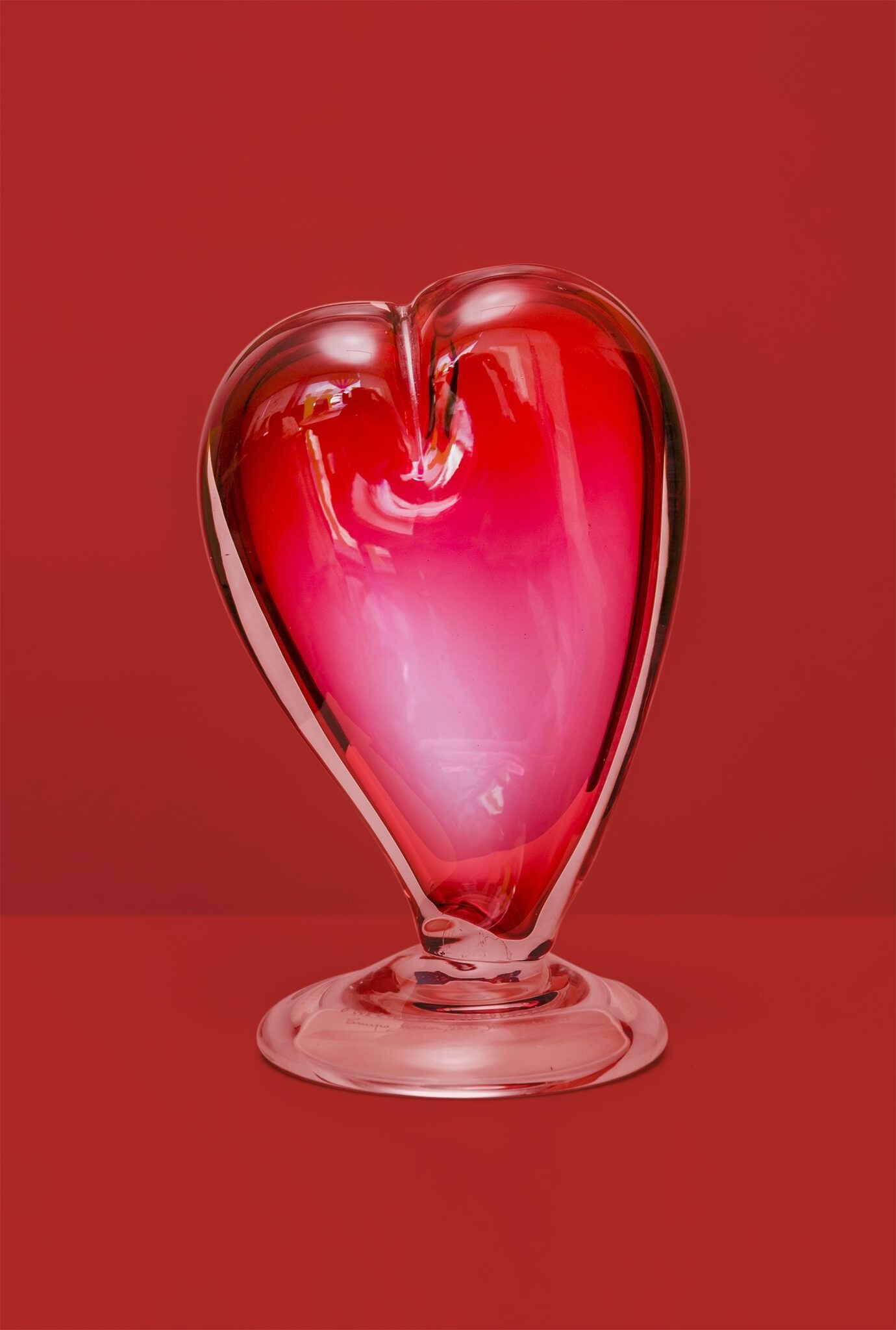
It all began with a glass heart. Small in size, but immense in meaning. On 28 March 2002, a group of Delta employees decided to surprise Rui Nabeiro on his 71st birthday with a special gift: a red heart, made of glass, which symbolised the wish to turn small acts of volunteering into a true solidarity project. This is how the project Um Coração Chamado Delta was born – an initial trial of what would later become the Associação Coração Delta.
The plan was simple: collect clothes, school supplies, and other essential goods, sort everything after working hours, and, at weekends, deliver it to those who needed it most. Delta sales staff, who travelled the country from north to south, gave crucial support by carrying donations back and forth. In a short time, the group grew and the idea gained scale.
Three years later, on 31 January 2005, what began as a voluntary initiative became official with the creation of the association Coração Delta. With four main areas of action – education, health, solidarity, and social innovation – the mission grew and the impact became deeper. Two years later, in 2007, the Centro Educativo Alice Nabeiro (CEAN) was founded, a space that transformed education in Campo Maior and beyond.
That first glass heart still exists. It is in a display case at CEAN, as a reminder that major changes often begin with small gestures. And, 20 years later, the Coração Delta still beats strongly.
2. Lessons for life
From the very beginning, coordination of Coração Delta, as an association, was taken on by Dionísia Gomes who, with two decades of experience in the social field, saw in this project a completely different challenge. “It was a 180-degree turn in my life. I left a very traditional context to build something innovative,” she recalls. Rui Nabeiro, on the other hand, had professional experience in many areas, but not yet in the social field. “I thought he would have a lot to learn in those early days. But I was wrong.” The businessman and entrepreneur proved to be wise, intuitive, and thoughtful. “He led by example. And he always had a positive response for everyone who approached him,” recalls Dionísia, who worked alongside him for 17 years. “Mr. Rui had a wisdom that was not only acquired professionally: it came from his life story and his personality. That taught me more than I can put into words.”
3. School is also home
No student is the same as another, and schools must have room to include everyone. This is the purpose of EPIS – Empresários Pela Inclusão Social, an initiative that supports young people in their school journey, helping them overcome emotional and academic difficulties. Through personalised guidance, the programme develops skills such as emotional management, motivation, and improved school performance.
Patrícia Poejo, now 23 years old and a cultural animator at the museums of Campo Maior, joined EPIS in the 7th grade at the Campo Maior Secondary School. “The psychologist Mafalda Minas helped me manage my emotions better. My father was ill at the time, and it was hard to cope with everything. My grades dropped and she helped me recover,” she recalls.
The impact was even greater in the 9th grade, when she lost her father. “It was a very difficult period and Mafalda was always there. She taught me breathing techniques, helped me manage anxiety, and helped me leave that dark place,” recalls Patrícia. The support included one-on-one sessions, memory games, and strategic activities to improve mood and concentration. “When that support came to an end, I missed it a lot. It was a very important experience for me.”
4. Generating ideas to change the world
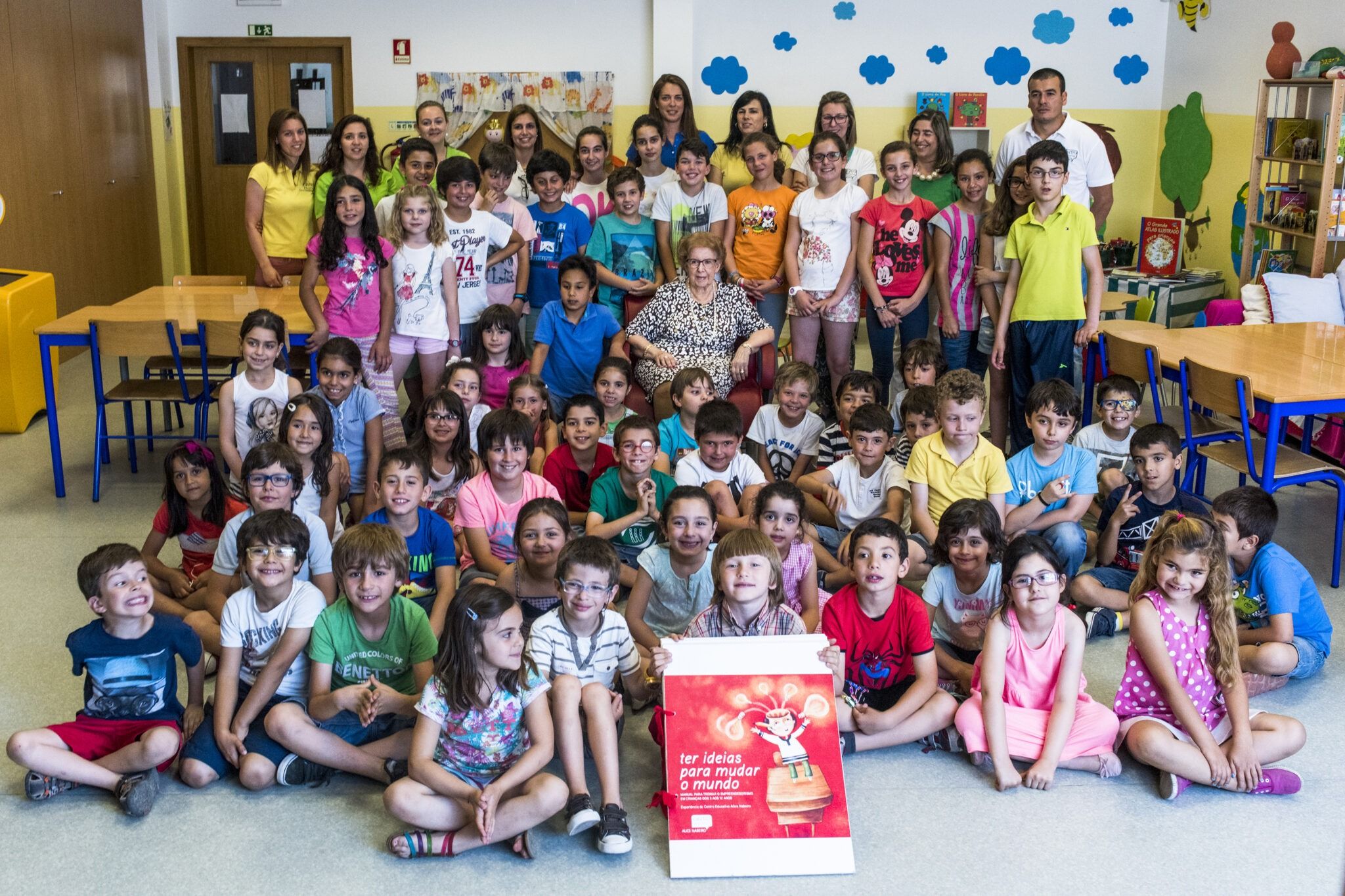
Imagine that someone discovered the wheel but told no one about it. It would not make sense, would it? In this context, CEAN launched the manual Ter Ideias para Mudar o Mundo, created from the desire to share with the world the results of its practice and to bring entrepreneurship to other schools in an innovative way.
One of the main driving forces behind this project was Professor Nuno Brito, then vice-president of Instituto Politécnico de Viana do Castelo. “There was a competition to foster entrepreneurship in polytechnics,” he recalls. “But we quickly realised that a more global method was needed.” Brito then decided to travel the 400 kilometres to Campo Maior – where the Escola Cultural methodology (which promotes transversal, dynamic and empirical training) was already stimulating children’s critical and creative thinking – and extend the invitation to produce this book.
The innovative methodology was synthesized in this manual, created to allow the model to be replicated, including the training of trainers. Reaching teachers meant reaching children, but also parents and communities. Set out in 93 pages, the methodology served as the basis for training sessions and meetings led by the teacher. The manual Ter Ideias para Mudar o Mundo was implemented for five consecutive school years in all schools in the Alto Minho region, reaching children from three to 12 years old.
The results were – and remain – immeasurable. “The value of empowerment is impossible to quantify. But the truth is that we developed the entrepreneurial capacity of the children, not only in a business sense, but also in a social and personal sense. The teachers told us that curiosity about entrepreneurship increased exponentially and that the children were truly empowered. The challenge was met.”
5. Alice Nabeiro doubled
From 2007 onwards, Alice Nabeiro was no longer only the name of the matriarch of the Nabeiro family, wife of Rui Nabeiro, but also became the name of the new educational centre – one of Coração Delta’s major commitments in the field of education.
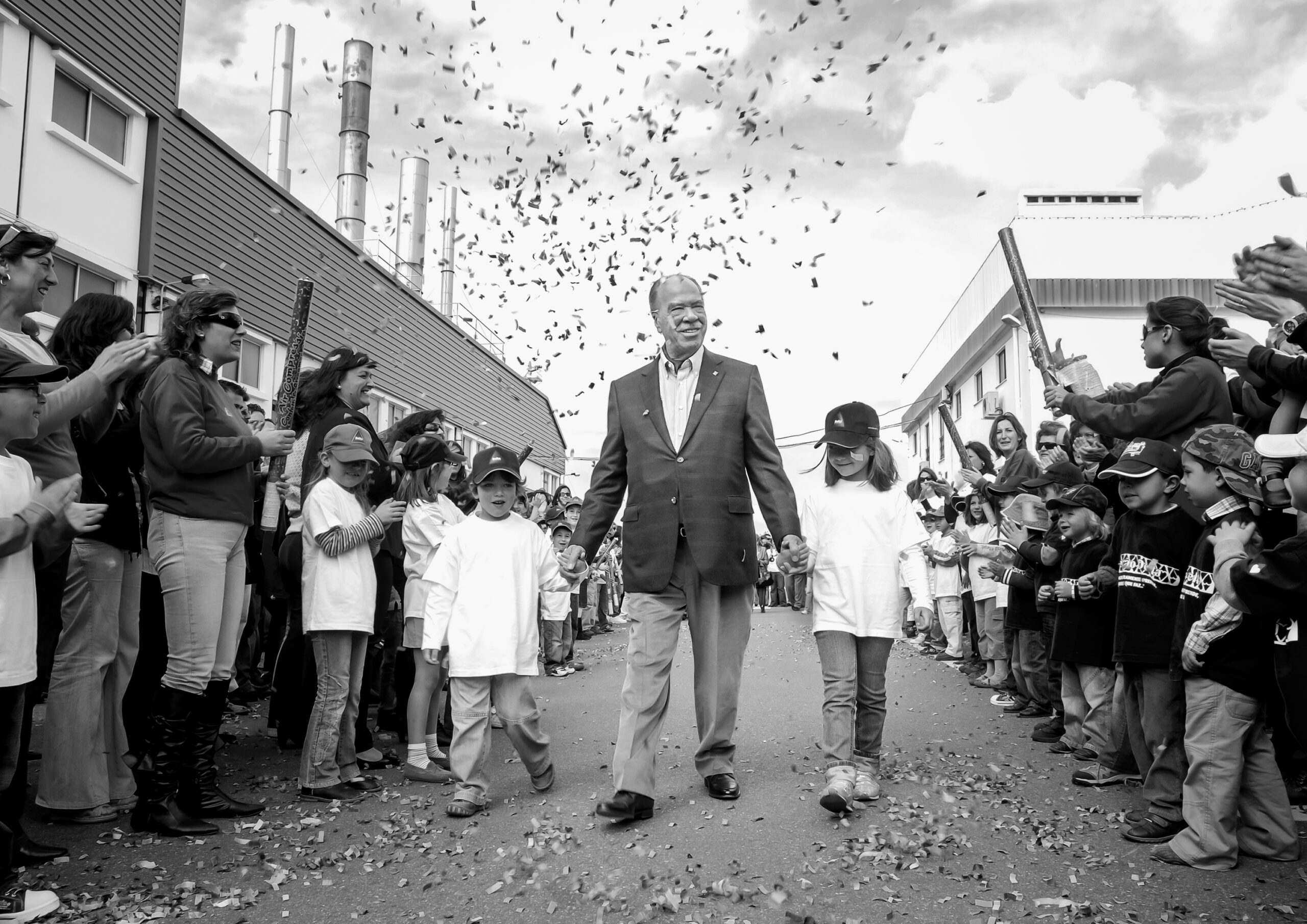
The day the Centro Educativo Alice Nabeiro (CEAN) opened its doors stayed in everyone’s memory. For several reasons, but one in particular: the surprise linked to the choice of the name. The event took place on the very day when Rui Nabeiro turned 76, on 28 March. “The inauguration was special,” recalls Helena Nabeiro, a board member of Coração Delta and daughter of Mrs. Alice. “My mother did not know that the space was going to have her name; it was a surprise. She thought all that bustle had to do with my father, because of his birthday. Usually everything was about Mr. Rui, and so we let her keep that idea while we prepared the surprise.”
Only when the façade was uncovered did Alice Nabeiro discover the surprise. “My mother was not expecting it. She was delighted. But it made perfect sense, because she has been here from the very first minute,” says Helena Nabeiro, who also explains that it was her mother who chose the materials and followed the construction work. João Manuel Nabeiro adds: “The need to create a space where the educational process would begin in the very first years of children’s lives came from both my father and my mother, perhaps even more from my mother, and it has been reflected in the educational centre from the start.”
Over these 17 years, Mrs. Alice has been a regular presence at CEAN. “She used to come in the afternoon and give support. The children knew her well and she loved being with them, playing games, giving them affection,” recalls Helena Nabeiro. “Just mentioning the children makes her eyes light up.”
6. Is the sky really the limit?
How does a nine-year-old child from Campo Maior find himself speaking to an audience of hundreds of people about the origin of the Big Bang? The answer is linked to Coração Delta and, in particular, to the Centro Educativo Alice Nabeiro.
Rodrigo Raimundo has always been fascinated by the unknown. Science was his great passion, and CEAN helped to nurture that curiosity. Between the ages of five and twelve, Rodrigo attended the centre’s ATL, where he gained access to new projects, materials, and experiments. “They broadened our horizons, because the town is small compared with the rest of the world,” Rodrigo explains. When he was in the fourth year of school, he was invited to present his own theory on the origin of the Big Bang at TEDx Kids – at the Museu da Eletricidade in Lisbon – where he was the youngest speaker. Two years later, he crossed the border to enter a robotics competition.
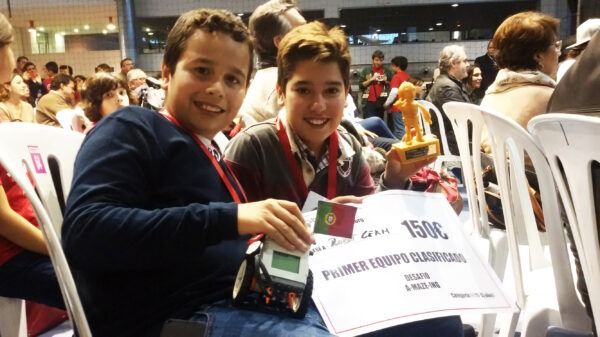
For three days, in Badajoz, he competed with a robot programmed as a team, at CEAN, created to complete a course as fast as possible. The group achieved the best time and won the first prize: 150 euros. Instead of keeping the money, they handed it to Rui Nabeiro, asking that it be donated to a social solidarity institution in the region. Now 19 years old, Rodrigo studies Physical Engineering and remains interested in exploring the unknown. It was, however, at CEAN that he learned one of the most important lessons: curiosity takes us far, but it takes us further when accompanied by a sense of community.
7. The earlier, the better
“My mother’s heart told me that there was something different,” recalls Patrícia Santos. Lourenço was two years old when his mother realised that something in his development was not progressing as expected. That was when Lourenço began to be supported by Intervenção Precoce do Coração Delta. The service is for children up to six years old who have developmental difficulties, ensuring close and personalised support in Campo Maior, Monforte and Arronches. The work of the specialised team, in collaboration with families, makes a decisive difference in the children’s growth. “I feel that, as a mother, I am part of this multidisciplinary team,” says Patrícia.
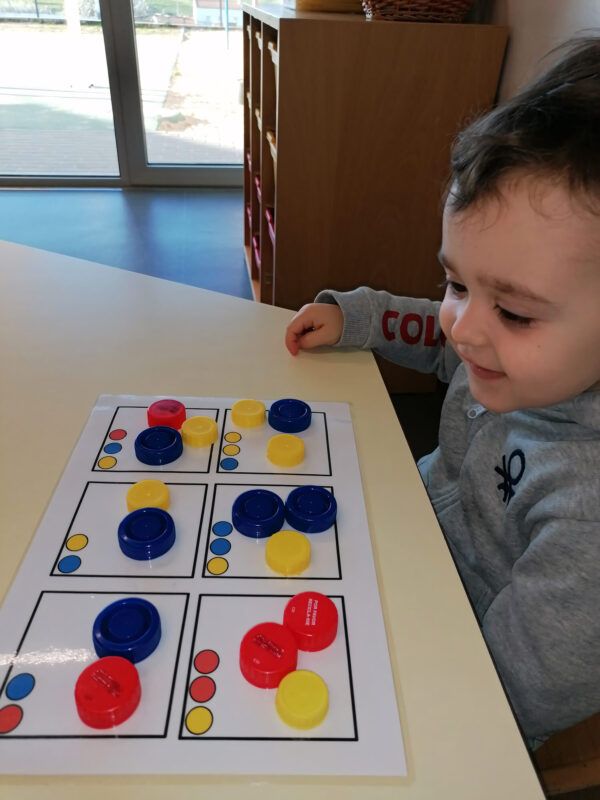
In four years, Lourenço made up the year and a half delay in his development. The boy who “did not communicate or maintain eye contact” became a curious, affectionate, and communicative child. “Thanks to Ester, Célia, and Marina,” his mother stresses. “I feel a deep sense of gratitude. I will never be able to tell Lourenço’s story without mentioning their names.”
8. Time to Give
Campo Maior, as an inland and border town of the Alentejo, struggles with an ageing and isolated population. In 2010, after a series of news reports describing cases of loneliness among older people, Rui Nabeiro created an initiative that could make a difference. “It was at that time that Dionísia [Gomes] and I presented the project to Mr. Rui who, being very sensitive to these issues, supported us immediately,” recalls Cláudia Gama, coordinator of Tempo para Dar.
The project began in 2010 with volunteers recruited within Grupo Nabeiro during visits to its various departments. “A network of people was created who visited older residents, kept them company, and offered some support,” recalls Cláudia. The project grew, and so did the type of support: in addition to home visits, there were now internal initiatives, such as the sewing workshop, the revival of regional songs, and the flower workshop, where paper flowers – inspired by those of the Festas do Povo de Campo Maior – are made by hand.
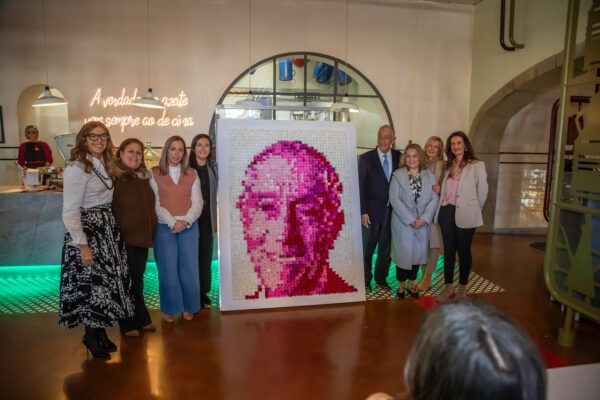
At the event celebrating 20 years of Coração Delta, the women who attend the workshop presented Marcelo Rebelo de Sousa with a picture they had made, with paper rosebuds symbolising the dedication and impact of Tempo para Dar.
9. Flower Workshop
"It is my second home," says 78‑year‑old Isabel Estríbio, referring to Tempo para Dar. Created to combat the loneliness of older people, the project offers company, activities, and the chance to learn something new every day. Isabel worked all her life. After raising her ten siblings, she spent 30 years at Novadelta and, later, worked for over a decade in the home of Rui and Alice Nabeiro. "I helped raise the kids in the family," she says with affection. At 70, she retired for good, but she had too much life in her to stay at home. "When I wanted to join Oficina da Flor, from Tempo para Dar, I was lucky: that very day I stayed there," she recalls. She made that place a second home and that team of 20 older women a second family.
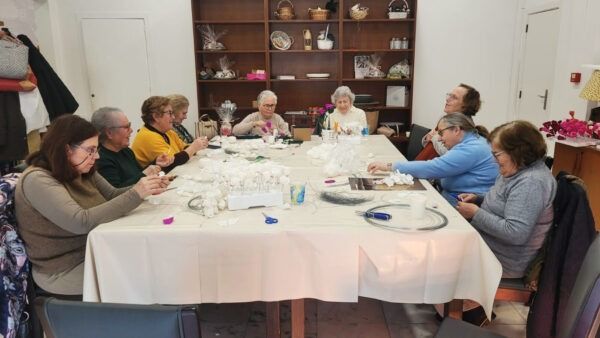
The group’s daily activities are guided by two monitors, Tânia and Maria João. “They are princesses, they take care of all of us equally, they are special people,” she states. Over these seven years, Isabel has devoted herself to embroidery and to making paper flowers. “I did not know how to make a single flower or a twist, I did not even know how to embroider. I did not have a life for that: I only had time to work, nothing else. But now that I have learned, I know how to do it and I like it very much.” Between conversations, needles, and paper petals, the days pass with joy. “To stop is to die,” she says with determination. “Look, I am even younger now!”
10. Coração Delta Tennis Academy
In the name of this project, “Coração Delta” comes before “Academia de Ténis”. This is not by chance. “It is because of Rui Nabeiro, who always said that the heart comes first,” explains Sancho Moura, the mathematics and science teacher at CEAN and a tennis enthusiast. He was the one who presented this idea to the Comendador and gave it shape, in 2017. “Mr. Rui loved the idea straight away,” he recalls.
The launch of the academy had two essential ingredients: the support of the Junta de Freguesia Nossa Senhora da Expetação, which provided the fields, and the enthusiasm of the CEAN students. Eight years later, it has around 40 athletes between 10 and 18 years old, 50 preschool children, and some adults as well. “We bring many people together around this sport,” sums up Sancho.
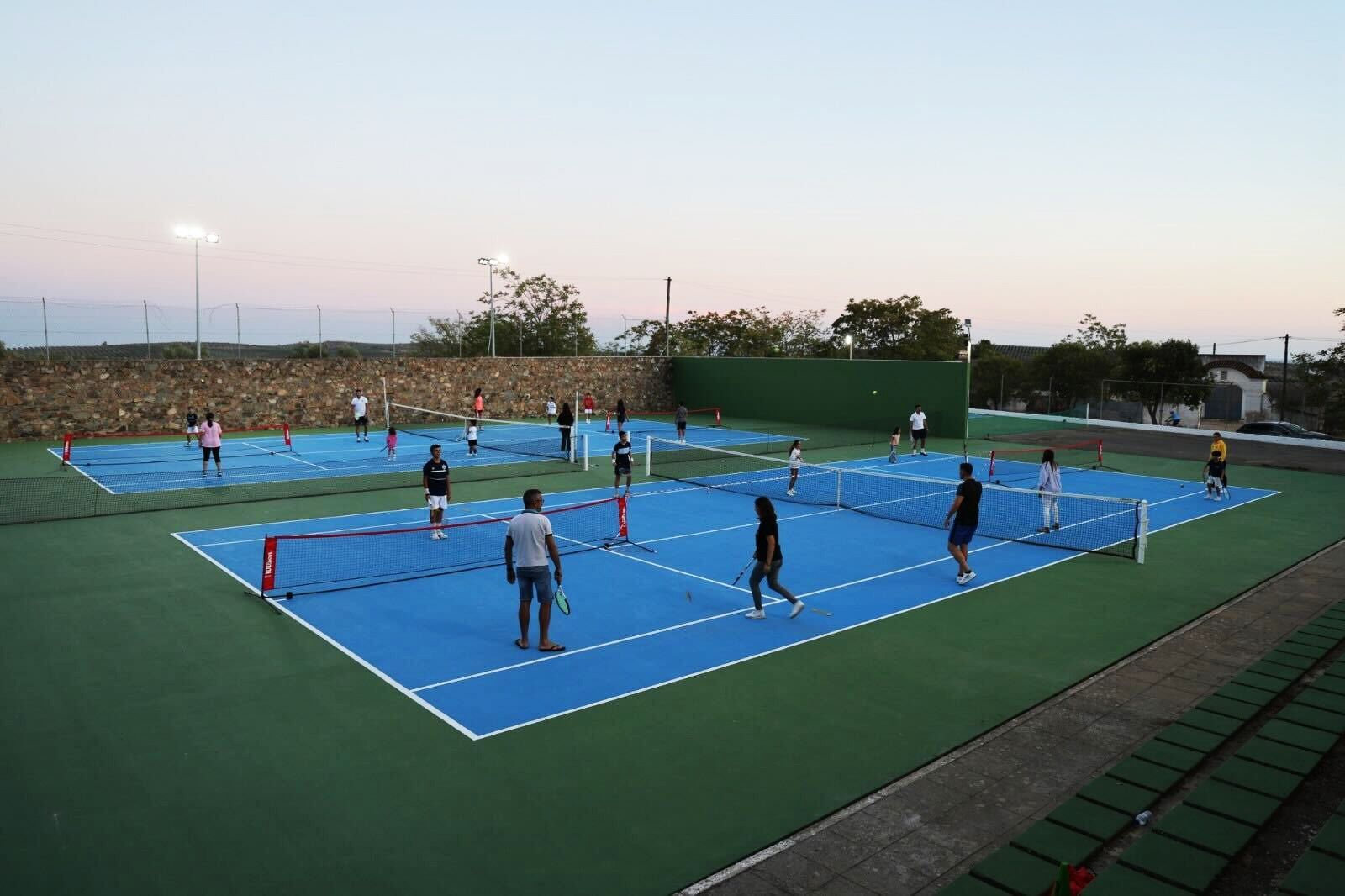
Training sessions take place from Monday to Friday, in the late afternoon. At weekends, coaches Sancho Moura and Luís Orelhas accompany the athletes to tournaments.
At Coração Delta Academia de Ténis, tennis is seen as more than a sport. “The mental side is essential. We are always making mistakes and surpassing ourselves, and that is how we improve,” the coach explains. Team spirit and a family atmosphere are hallmarks of the club. “Training sessions fly by, and at the end the kids ask: ‘Already?’ – that makes me very happy. I feel that we help create a moment of focus and joy in these children’s daily routine.”
In 2025, the first edition of the Torneio de Ténis Comendador Rui Nabeiro will take place, a federated event that pays tribute to the club’s patron and to the values he always upheld: self‑improvement, resilience, and civic spirit. In the future, the academy aims to continue growing and to inspire more young people to discover tennis as a way of life.
11. Campo Maior European Solidarity Town
Campo Maior Vila Solidária da Europa is a program that, since 2013, has supported unemployed people, vulnerable families, children, and older adults. It works with European funds and acts locally, through local social development contracts. How? By promoting opportunities and building bridges between workers and local companies, contributing to the development of social and civic skills, and fostering equality and the inclusion of vulnerable people in the community.
Maria Manuel Valentim, the project coordinator, has already lost count of the projects that have most marked her during this period. She highlights, however, the youth volunteering in local institutions during the summer school holidays, which has been repeated for 12 years. “We once had more than 100 volunteers per year,” she says, proud. “It is a way for them to leave home and be called to work on empathy, responsibility, and a sense of community. At the end, they receive a certificate of acquired skills.”
Among the inspiring stories is that of Xavier, a young man passionate about information technology who, at just 15 years old, volunteered at the Comissão Unitária de Reformados Pensionistas e Idosos de Campo Maior, where he dedicated himself to teaching older people how to use social networks, email, and video calls so they could contact family members living far away. The impact was enormous: “At the end of the placement, the older people asked a lot about Xavier. They were very fond of him. And he was as well, because he understood the difference he had made in those people’s lives.”
12. Girl Move
Alexandra Machado had an established career in the corporate world, including ten years as managing director of Nike Portugal, when she decided to change course. In 2012, inspired by the impact of the Girl Effect Foundation, she realised she wanted to dedicate her experience to social transformation. This is how Girl Move Academy was born, an association that focuses on female education and leadership as tools for the development of Mozambique.
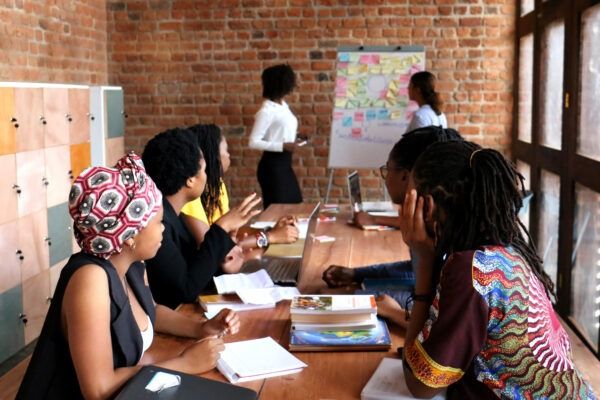
A Girl Move believes that educating a woman transforms a community. “Our mission is to promote a new generation of women who are agents of the country’s development,” concludes Alexandra. At the academy, the innovative model of intergenerational mentoring and learning connects girls with women who can inspire them in different fields, creating a network of social impact. Since its foundation, the project has already changed the lives of more than 15,000 young people, promoting a multiplier effect that reaches entire families.
The project has received international recognition and is supported by several organizations, including Coração Delta. Some of these young women have completed internships in companies of Grupo Nabeiro. This proves that training and empowering women can challenge barriers and create opportunities.
13. Pro-Move-Te
The three-in-one of words in the name reflects the spirit of this initiative: dynamic, personalised, fast. Pro-Move-Te is a youth employability programme created in 2017, which brings together nine municipalities in the district of Portalegre and Delta Cafés as partners. David Ferreira, from Campo Maior, took part in the first edition and keeps excellent memories of the three months of training. “I had just moved from Lisbon. I signed up because I wanted to understand which companies existed in the region and what kinds of vacancies there were.” The experience exceeded expectations.
With a dynamic programme, Pro-Move-Te promotes the exchange of experiences and creates opportunities for companies and young unemployed people. How? Through mentoring, coaching and training on CV redesign and improvement of oral communication, as well as organising company visits and promoting direct contact with recruiters.
"I had 10 years of experience in legal services and I ended up finding, through Pro-Move-Te, an opening precisely in that area, at Delta." David got the job and kept it for six years, then moved internally to the information systems department, where he now works as a help desk technician. "Looking back, Pro-Move-Te was my turning point."
14. 3D Printing Centre for Health
Technology at the service of those who need it most creates miracles. One example is the 3D Printing Centre for Health – an association founded in 2022 by professors and researchers from the research centres LIBPhys and UNIDEMI, in collaboration with FCT Fablab – which develops medical devices through 3D printing with the characteristics required for each case, and offers them free of charge to those who need them most. “We develop devices that are increasingly personalized, so that people gain autonomy and quality of life,” explains Cláudia Quaresma, president of the association.
In less than two years, the 3D Printing Centre for Health has already produced 82 devices for 79 patients and nine healthcare services, including anatomical models that help surgeons prepare for complex operations. Among many remarkable stories, one stands out: a girl who was born without one of her hands. At the age of 8, Carolina received three prostheses made exclusively for her: one for general activities, another to help her eat, and a third so that she could ride a bicycle. The first thing she did, when she tried on the general-activity prosthesis, was to form a heart with her hands.
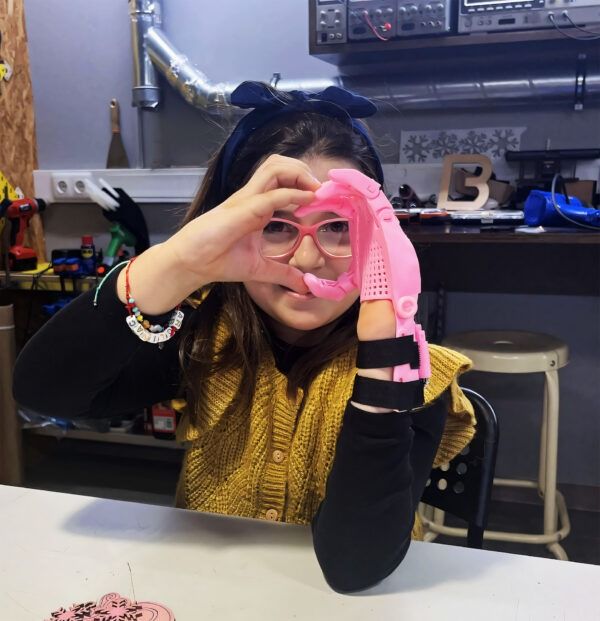
“The team really had to make an effort not to shed a tear. It was clear that this was very symbolic for Carolina and for her parents.”
With more than 60 volunteers and partnerships with public and private hospitals, the 3D Printing Centre for Health continues to grow with the support of Coração Delta, responding to an increasing number of requests and, in the process, changing lives through innovation and solidarity.
15. Café that opens doors
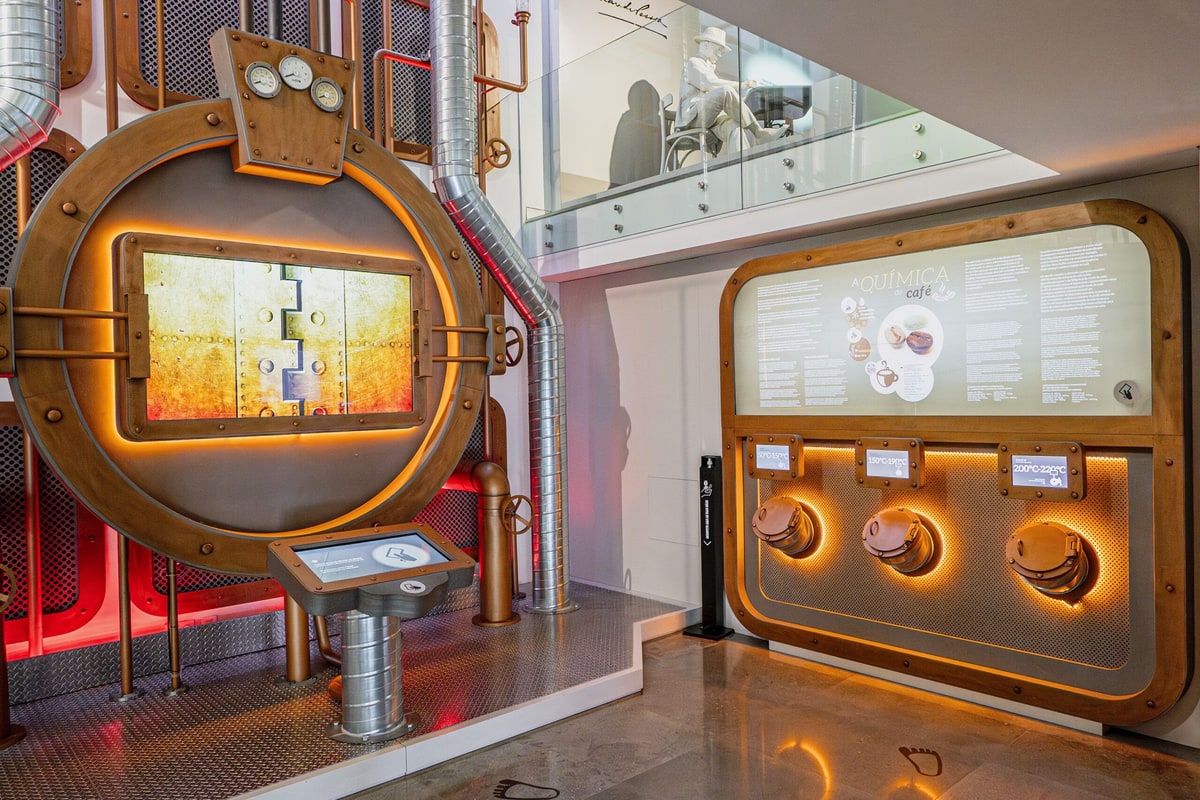
An immersive experience in the world of coffee that combines technical knowledge, personal development, and proximity to the job market. This is Coffee Training, an initiative by Coração Delta aimed at students and young people looking for work. The program takes place at the Centro de Ciência do Café, in a day dedicated to learning and networking. Dragos Cristian Florea, 22 years old, an industrial maintenance technician at Delta, took part in Coffee Training in 2020 while attending a postgraduate course in Metalomecânica and Metalurgia. “We went as a group of 15 students. We visited the Centro de Ciência do Café, learned the entire history of coffee, and carried out some interpersonal exercises,” he recalls. For Cristian, the experience was excellent. “That day helped us prepare for the job market.” Contact with the world of coffee proved particularly useful when he became a locksmith at Delta. “The knowledge I gained was an asset, as were the contacts I made,” he says.
16. LIVING ROOM
Without bureaucracy or half-answers, ESTAR is committed to being present where its help is most needed. Founded in 2019 by Madalena Palma and Inês Féria, the association provides an immediate response to social emergencies, supporting associations and communities in critical moments, such as fires, floods, or other types of emergencies. “We realised that the speed of the response was innovative and distinctive,” recalls Madalena Palma.
During the pandemic, ESTAR’s work was particularly significant. Many foreign communities – with precarious jobs and working in sectors that froze from one day to the next – were left without income and, at times, without anything to eat for days. “The van donated by Coração Delta saved us,” Madalena states. It had arrived the previous year and made all the difference.
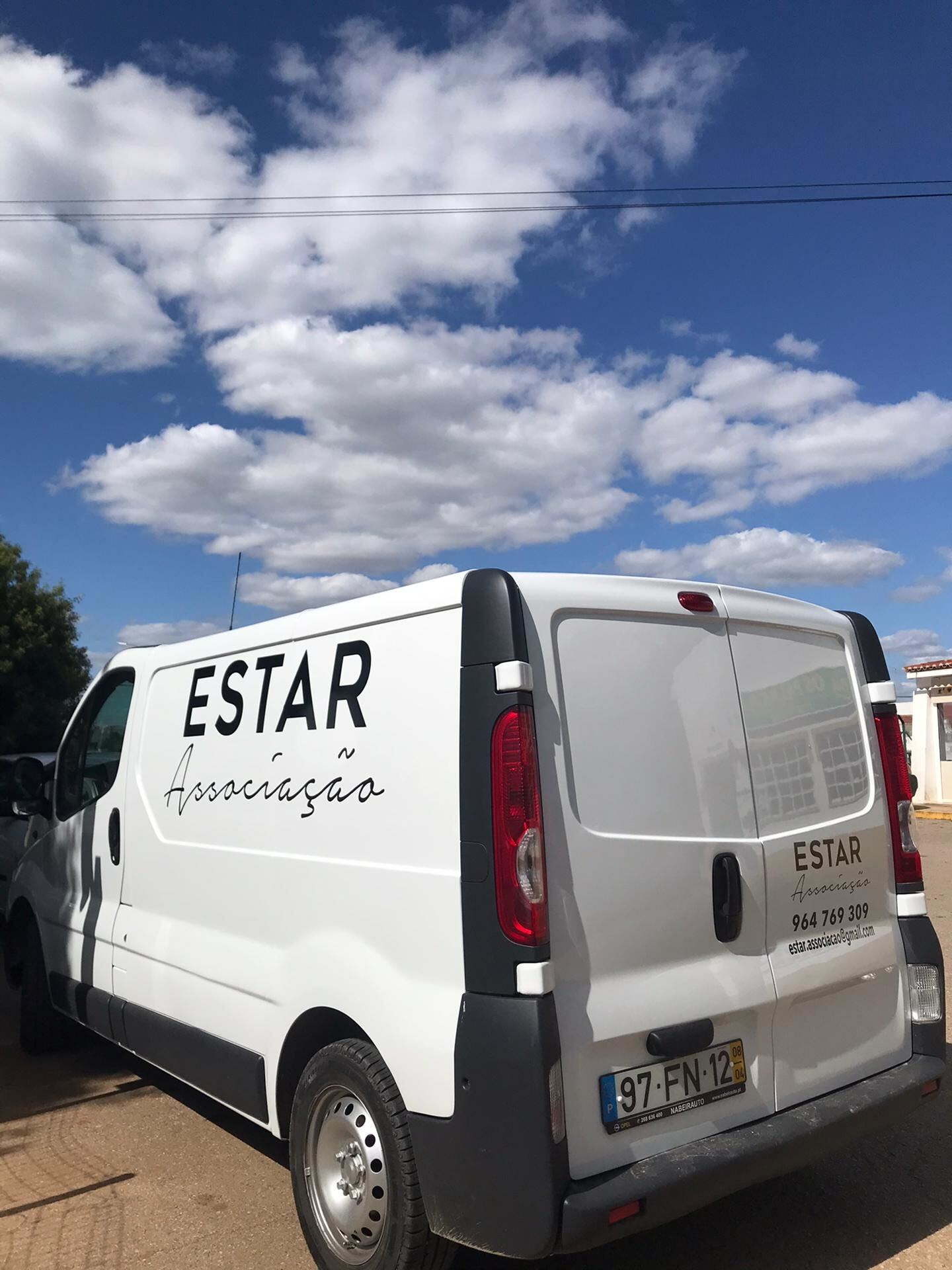
“We filled the van and delivered food to those who needed it most. I feel we reached many people at the right moment.”
With a food-goods warehouse always ready to respond to crises and a growing support network, currently with 40 volunteers and seven employees, ESTAR operates in the district of Beja and works with other associations from the north to the south of the country.
17. CM Factory
A factory of the future could only be connected to young people. CM Factory is the Coração Delta program that challenges the people of Campo Maior to become agents of change in their own town. Through talks, workshops, and round tables, it promotes debate on entrepreneurship, innovation, and the retention of talent in the most depopulated regions.
Sara Henriques, a physiotherapist from Campo Maior, took part in one of the initiatives as a member of GEDA – Grupo de Ecologia e Desportos de Aventura, an association that energises the town with several types of activities, the best known of which is the Festival dos Grous.
“It was interesting to sit down and talk about Campo Maior and the possibilities that the town still has to explore,” he explains. They discussed decentralisation, what can be done to encourage young people to settle in the interior of the country, and how to energise the territory. “These are issues that affect us deeply. From that day, what remained above all was the sense that we are not alone in this.”
18. Catholic Mission in Guinea-Bissau
The Catholic Mission in Guinea-Bissau is not a formal association, but rather an organized group of volunteers that, since 2021, has been providing essential support to local communities. João Mendes is the spokesperson for this group and one of its most active volunteers. Twice a year he travels to the field on mission, accompanied by electricians, teachers, and doctors, ensuring that the most urgent needs are met.
The impact is already visible on several fronts. The group began by creating a nursery for 80 babies and then a primary school for 57 children, where one of the classrooms received a symbolic name: Sala Delta.
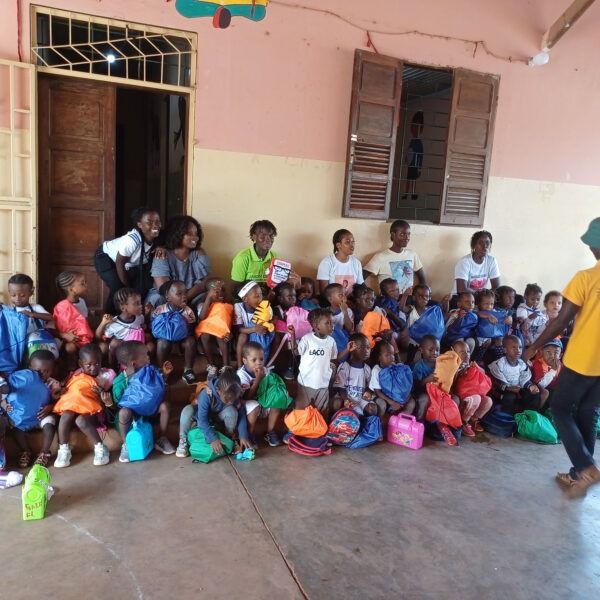
"It is a joint effort. Without the more than 80 volunteers and without the support of organisations such as Coração Delta, it would be impossible," he states. A second nursery for 97 children was also added, in the locality of Suzana.
It was precisely in that place, on the northern border of Guinea-Bissau with Senegal, that the last mission took place, at the end of 2024. A total of 830 people benefited directly, a record that left the volunteers very satisfied. “With just one donation from Coração Delta of solar panels and batteries, we managed to light up the village of Suzana. Today, there is power in the school, the health post, and the local radio station.” The impacts are sometimes difficult to measure, but they are felt. “The gratitude of those people for the simplest things we can imagine is immense. For me, this project is an awakening,” says João Mendes.
19. Entrepreneurial Talent
Spending weekends in parent meetings is not exactly most people’s idea of a dream plan, let us admit it. But “it was transformative,” says Jorge Grifo, recalling the initiative promoted by the Casa Interior project, from Coração Delta, in 2018. The challenge was to discuss, together with other parents connected to the Centro Educativo Alice Nabeiro, talent in children – how to discover it, encourage it, and help it grow.
There were three months of group sessions, which included conversations and practical activities. What was learned proved so useful that it resulted in a “manual made with love”, as Jorge describes it. Talento Empreendedor: Dicas para pais e mães is a guide that aims to help parents rethink how they support their children’s growth and how they value the signs that reveal their talents. The book brings together what Jorge – and the other participants in the sessions – discovered about parenthood and what inspired them so deeply.
“I have a 14-year-old boy and an 11-year-old girl. The work we did led me to think about our daily life and how, even in the middle of all our tasks, we need to find time to talk with calm and presence. It is through small signs that we understand how they are and who they really are. Sometimes ten minutes of conversation make all the difference. That was the lesson that stayed with me most throughout the entire project.”
20. A new heart…
Two decades later, the glass heart offered to Rui Nabeiro once again marked a moment full of meaning. On 31 January 2025, the association celebrated 20 years with a ceremony at the Centro Educativo Alice Nabeiro in Campo Maior. The event brought together several public figures, including the President of the Republic, Marcelo Rebelo de Sousa, and the president of Coração Delta, Rita Nabeiro, in a moment that recognised the social impact of the association over the past two decades.
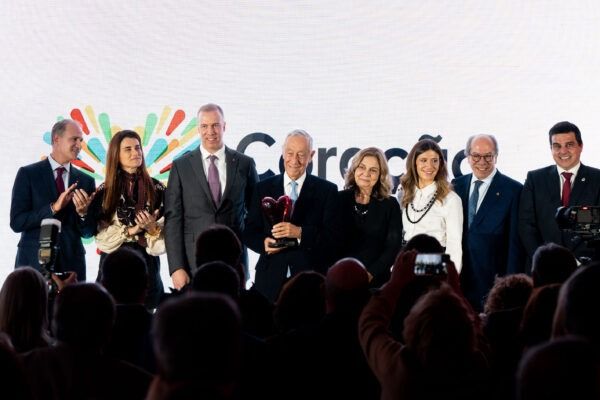
One of the most symbolic moments was the presentation to the President of a replica of the glass heart that marked the birth of Coração Delta, as a way to highlight the association’s ongoing commitment to social solidarity. But the surprise did not end there. Marcelo Rebelo de Sousa also brought a special gesture: the decoration of Coração Delta as an Honorary Member of the Order of Merit, as a way to recognise its work in social inclusion, education, health, and community support.