
And the people wanted it in 2020 – but the pandemic did not allow it. The festivities should only return in 2023, but in the meantime they received the most desired prize: they were classified as Intangible Cultural Heritage of Humanity.
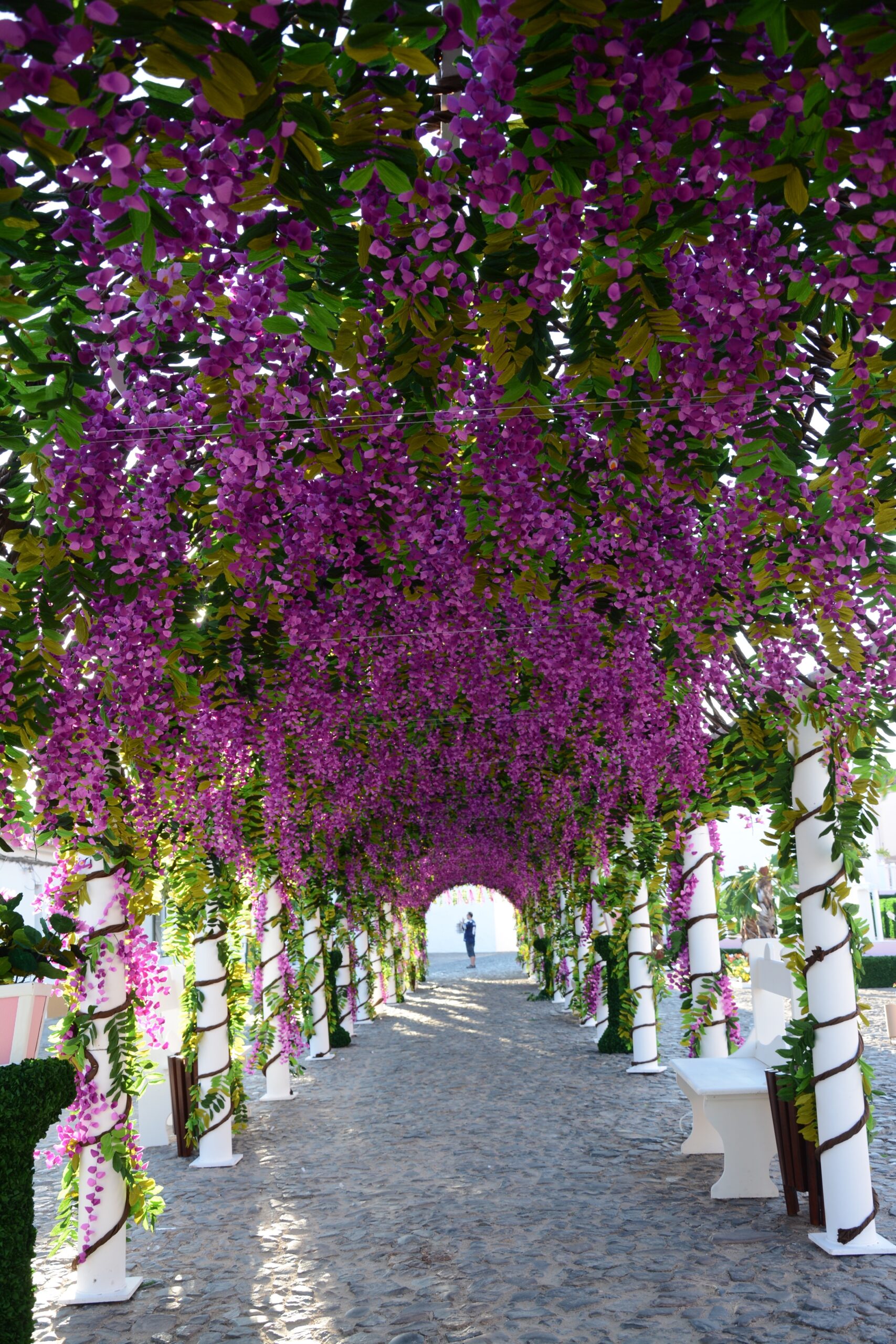
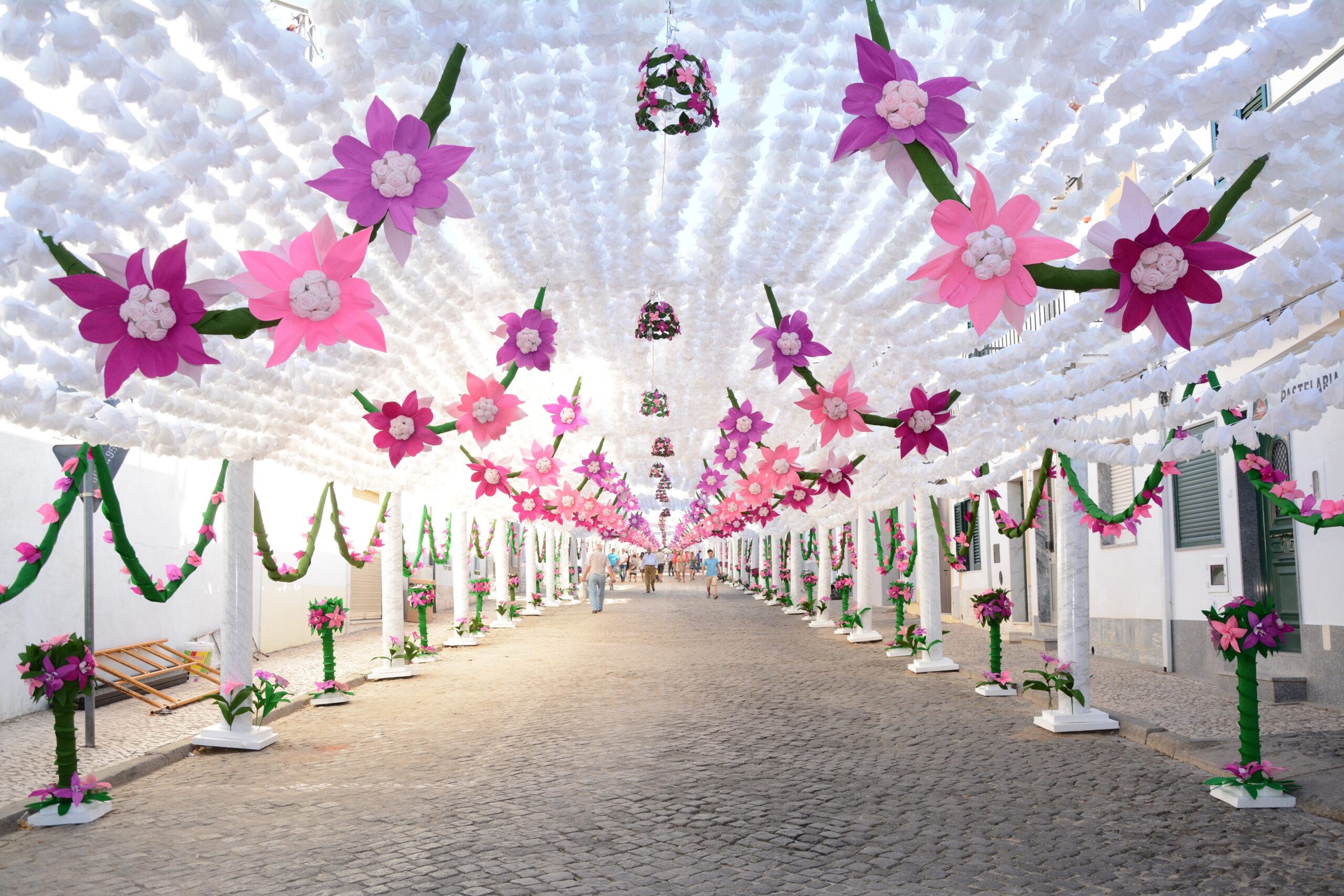
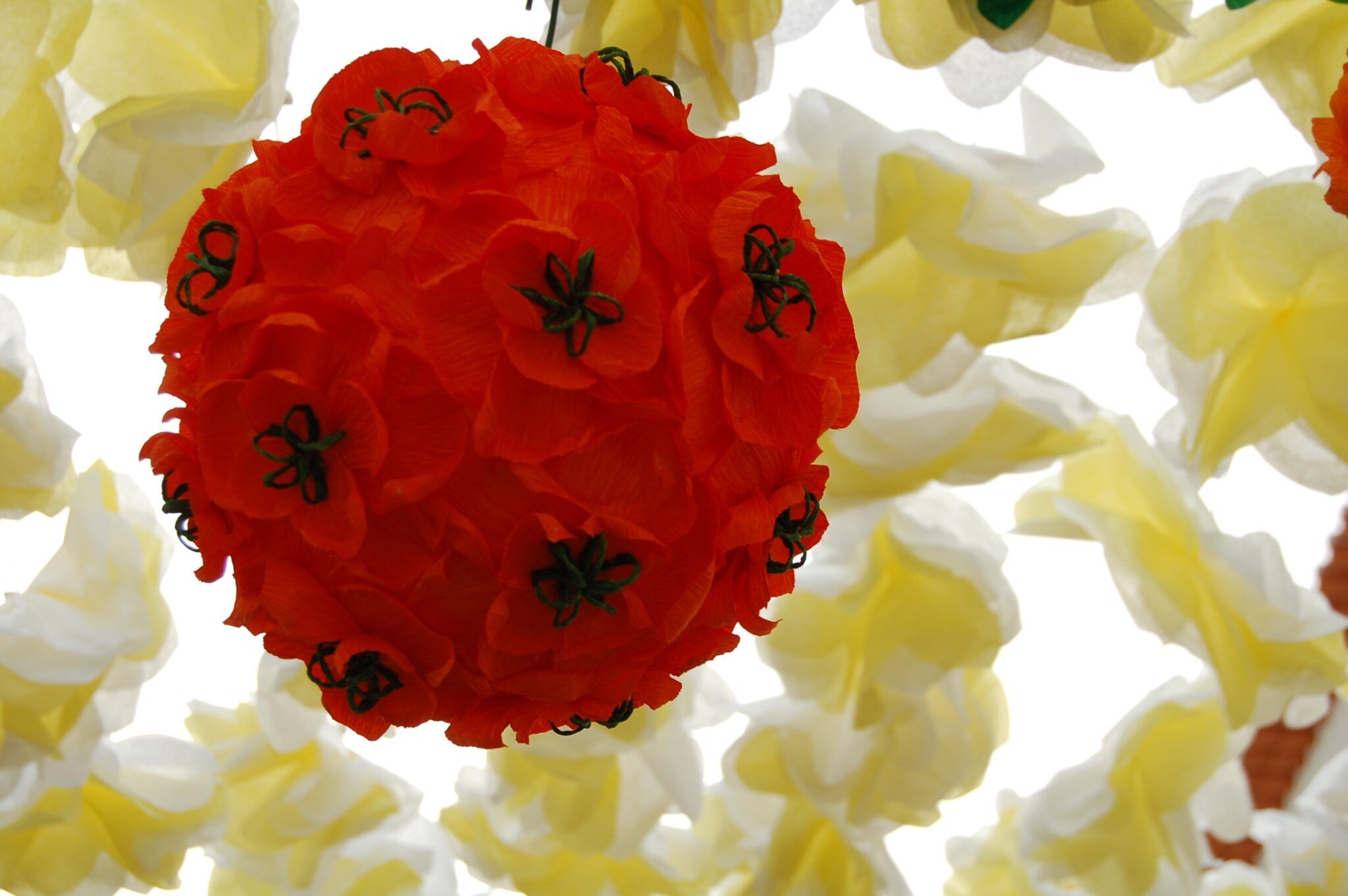
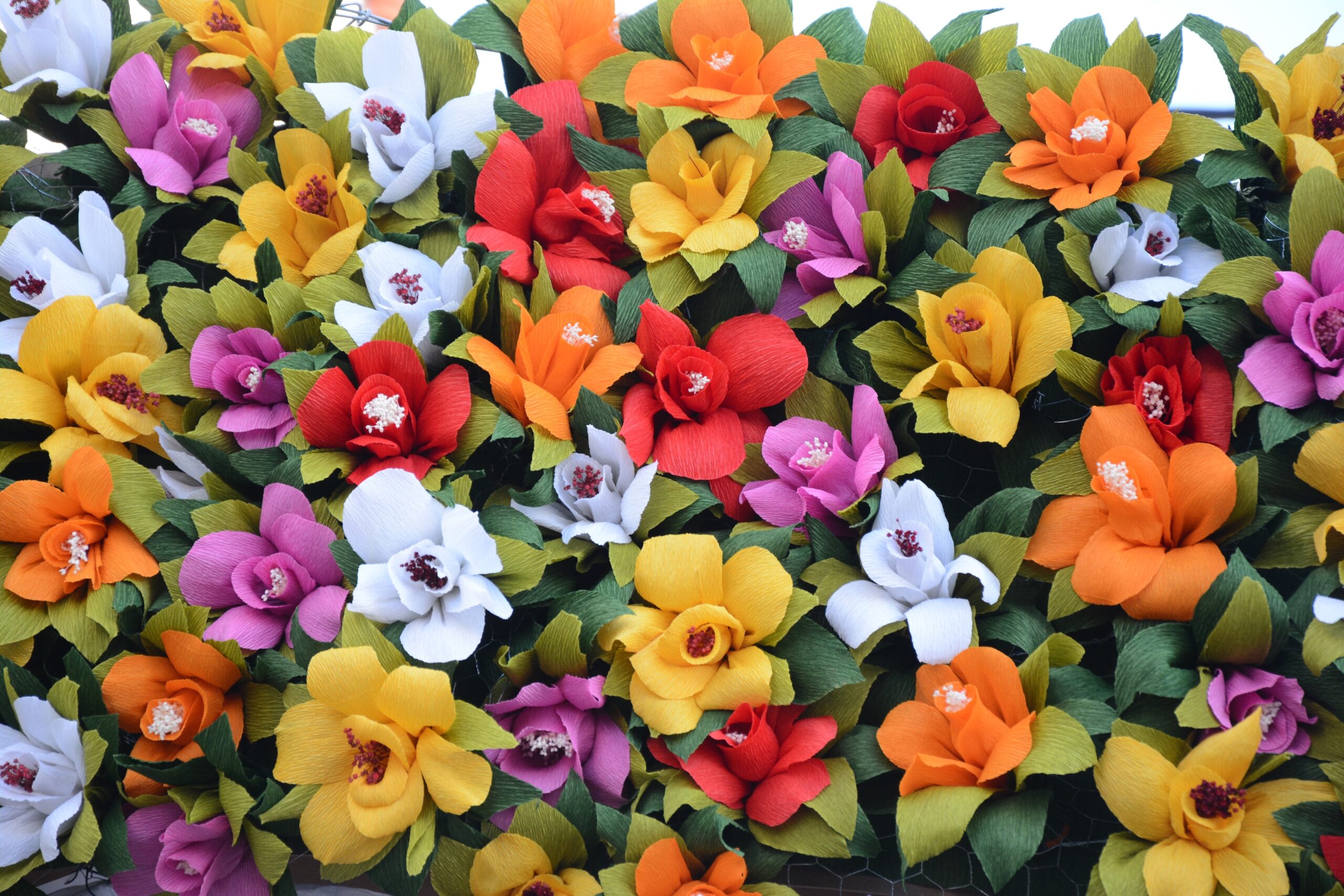
It will not be this year that the streets of Campo Maior will once again be decorated with paper flowers. We will still have to wait one more year for the Festas do Povo to return. As the name suggests, these are traditional festivities, with concerts, folk dance groups, and small stalls selling food and drink, like almost all festivals. But they are much more than that. For a week, or even longer, the streets of Campo Maior are transformed into large flowering gardens. Flowers of every colour and every shape, flowers completely covering the streets from side to side, filtering the sunlight and giving the town the atmosphere of an “enchanted city”. Flowers cut and folded so delicately that they almost look real – some people have to touch them to be sure they are really made of paper.
The most recent edition of the Festas do Povo took place in 2015.In 2020, preparations for the festivities were already underway when the covid-19 pandemic halted all plans. “It was a very great sadness,” recalls Vanda Portela, who had just been elected in January that year to the board of the Associação das Festas do Povo. “Because of the association’s elections, everything was a little delayed, but we went door to door speaking with residents and, by that time in March, we already had 82 streets registered.”
One of the distinctive features of the Campo Maior festivities is that they have no fixed schedule: “There are only festivities when the people want them,” as they say there. “In general, when we reach 70 registrations of streets or sections of streets, we know we have the conditions to move forward. Then more always appear because, when there are festivities, no one wants their street to lie fallow: people encourage one another, especially in the oldest part of the town. I believe we would easily reach one hundred streets,” says Vanda Portela. Unfortunately, due to covid-19, this “fallow period” was forced, general, and prolonged. Now, if all goes well, the Festas do Povo should be held again in 2023.
“We will come back in full force,” the person in charge assures. “All the more because we have another reason to celebrate.” Last December, the Festas de Campo were added to the UNESCO – United Nations Educational, Scientific and Cultural Organization – list of Intangible Cultural Heritage. But, once again due to the pandemic, there was no chance to travel to France, where the meeting took place, nor to celebrate the achievement properly: “We marked the occasion on social media, as best we could, but it was not the same,” she laments.
Even so, let there be no doubt: “The people of Campo Maior were very proud, because their merit was recognised. Over one hundred years, this population has dedicated itself and worked on a voluntary basis. Many men and women have worked to sustain these festivities, despite all the difficulties, and the festivities have always taken place and have always improved: besides having more streets involved, the quality of the ornamentation is higher and higher, and visibility has also increased. And we receive more and more visitors – we cannot know for sure, but in the last edition we estimate that there were more than 700,000 people,” says Vanda Portela. “UNESCO’s recognition is also a window to the world. We were already receiving many visitors from Spain and other countries; now we hope that even more will come and that everyone will get to know our festivities.”
The origin of the festivals
To understand the origin of the Festas do Povo, it is necessary to go back to the eighteenth century and to the festivals of São João Baptista, patron saint of Campo Maior, which took place on 28 October to commemorate the date when, in 1712, the settlement had freed itself from “a siege that had put its property and its people’s lives at risk”, according to documents of the time. Francisco Pereira Galego, a teacher from Campo Maior who researched several aspects of the town’s history, recounts in the work Campo Maior. The Festas do Povo from their origins to the present day (Livros Horizonte, 2004), how these festivals fell somewhat into oblivion in the second half of the nineteenth century and, when they were resumed at the end of that century, were moved to late August and early September, abandoning their exclusively religious character to become above all popular festivals: the procession remained, but now with decorated and illuminated streets at night, bullfights, dances, and other entertainments.
At that time, Campo Maior was experiencing a period of economic prosperity. Agriculture was developing, with small landowners producing vines and olive trees. The proximity of the border allowed trade to grow, in particular through smuggling. In this setting, the “artists” – that is, all those who worked in trade, manual crafts, and other trades, forming a more urban working class and, in general, a more educated one – came together to organise, in 1893, the Festas em Honra de São João Baptista. In that first year, the festivities lasted four days and were a success. They were so successful that it was decided to repeat the experience in the following years. The festivities then began to be prepared further in advance by a committee created for this purpose.
In 1894, for the first time, the festivities ended with a torchlight march, in which the population expressed its gratitude to the members of the organizing committee and to those who had contributed donations for the celebration. But the major innovation was the “enramação” of the streets. It was still a very simple form of decoration, with masts and poles linked by ropes covered with boxwood, from which hung the elements that created the “iluminação à veneziana” (with paper balloons and harmoniums with candles inside or small oil-wick lamps). The first paper ornaments also appeared, such as pennants and streamers. In some houses, women brought potted plants from their yards and placed them on the façades to decorate the street. The two philharmonic orchestras – Progressiva and Regeneradora – took part in the open-air festivities and in the procession; there were bullfights and, at night, dances and fireworks.
“Besides the church festivities, which are held with full pomp and splendour, the decoration of the streets and squares becomes remarkable, as their residents, competing with one another, have covered them with greenery and flowers, which gives them a very picturesque appearance, further enhanced at night by the glow of striking and abundant illuminations with balloons and lanterns,” wrote Correio Elvense on 31 August 1894. And a few days later it reported how “all the inhabitants, filled with the firmest desire for unity, began days before the festivities to work, day and night, on this embellishment.” In other words, all the main elements of what would become the Festas do Povo were already there.
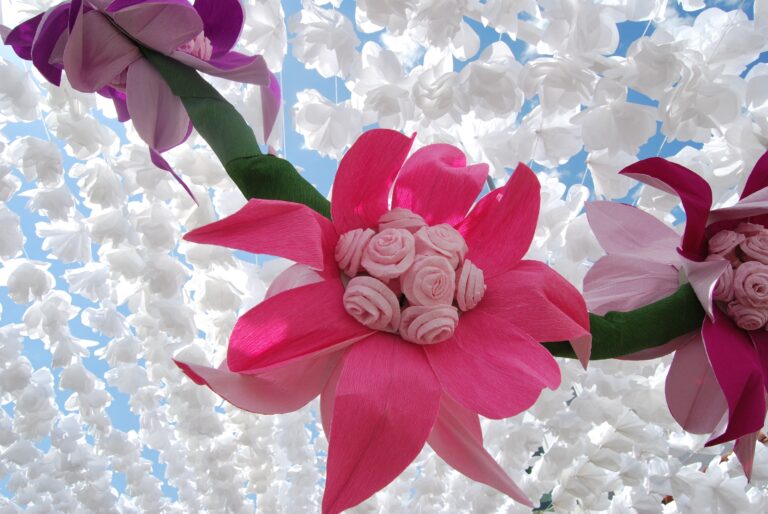
The“Festas do Povo”
For six years, the festivities were held under the initiative of the “artists”, with the participation of the entire population. From the beginning, the women, “the beauties of Campo Maior”, took on the task of decorating the streets, spurring one another on to see who would have the most beautiful flowers. At that time, around 30 streets were decorated, in other words, all the streets in the town. And although the decoration used mainly plants, some ornaments made with coloured paper were already appearing.
The festivities lost momentum in the following years and are even said to have been suspended for about ten years at the beginning of the 20th century, before returning in 1921, according to reports in the newspaper O Campomaiorense, during the first four days of September. Between masses and processions, bullfights and bicycle races, charity fairs and dances, the “decorated streets” were there in the programme.
“We saw most of the village’s squares and streets, some of them the most modest, brightly decorated with boxwood garlands and pennants, with large and ornate masts rising in many of them, all lit at night with a great number of Venetian balloons, lanterns, and electric lamps, which, together with the lights of private houses, gave the village a very pleasant appearance,” reported O Campomaiorense in its 15 September edition. “Praise, then, to all who contributed so that this place, in just a few days, became a complete garden and, through its liveliness, took on a very bright and festive tone. We can confidently say that this included all the inhabitants of the village—men, women, and boys—who all, eagerly and in the best spirit, contributed to the enhancement of the festivities.”
And, because the popular and collective nature of the undertaking is already clear, it is no surprise that in 1922 the term “Festas do Povo” appears for the first time in that newspaper, as Francisco Galego explains: “The expression was created by the man who drove the cultural life of Campo Maior at that time, João Ruivo. He was, in fact, the soul and the body of the newspaper.”
Festas do Povo: this was, then, the name given to these festivities in which “the streets of the town appeared strikingly decorated, as if in a magical apotheosis. Garlands of greenery, multicoloured flags, pennants, triumphal arches breaking the monotony of ordinary days,” according to the newspaper.
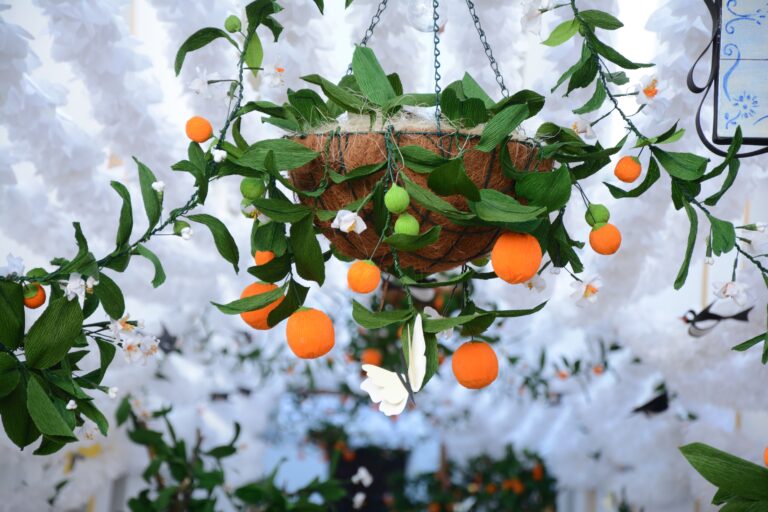
Irregular frequency, but each time with higher quality
Despite all the enthusiasm, from then on the festivities would not take place every year, due to major economic constraints, political upheavals, and also problems in organizing the event. In the 1930s, for example, they were held only four times. At this point, Portugal was living under the Estado Novo; shortly afterwards the Spanish Civil War began, followed by the Second World War. There are reports of celebrations, although modest, in some years of the 1940s and, later, in an attempt to revive the tradition, in the years 1952, 1953, and 1954. Francisco Galego writes:
“Although the traditional layout was maintained, there was greater attention to the decoration of the ‘ceilings’. These were no longer limited to the traditional shapes of fringes, padlocks, scarves, and mantillas, and gained richer ornamentation. Artificial flowers multiplied in forms that were increasingly original and elaborate. The ‘entrances’ made of reeds were replaced by structures built with more solid materials and with greater decorative refinement, becoming an essential element in the ornamentation of the streets.”
More paper flowers and more variety shows – these were the trends to note. “They are, in fact, the Festas do Povo, because it is the people, in an expression of collective will, who transform the town completely into an enchanting garden of the most varied and whimsical shades,” reported the newspaper Linhas de Elvas in 1952. “Each street, each alley and even each lane appears before our eyes like a charming panel that the hand of a renowned artist might have created. (…) It is, in truth, a cause of admiration and wonder to see so much beauty and art sown by the calloused hands of young men and women who, for more than three consecutive months, work patiently, often until the early hours of the morning, on the little flowers, the lights, the fringes and the other original decorations in elegant cut‑outs of coloured paper.”
Once again, despite the enormous qualitative leap seen in 1957, the festivities would only be held again in 1965 and 1966 (a period of great prosperity and activity in Campo Maior due to the construction of the Barragem do Caia) and, later, in 1972.
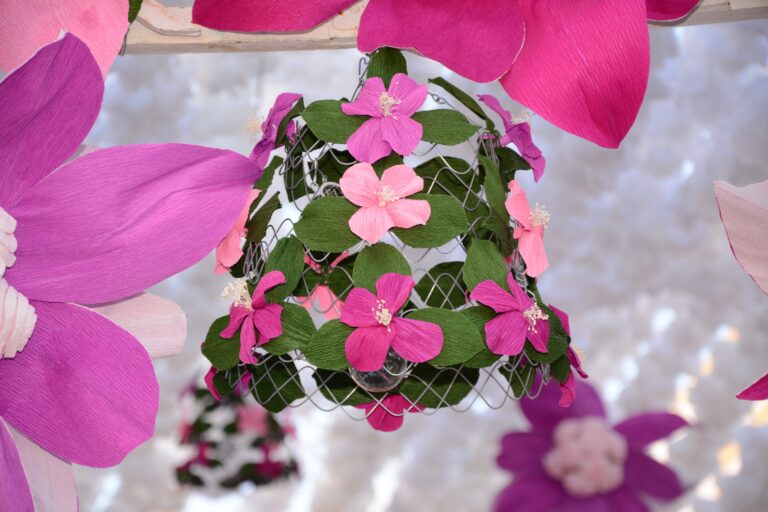
A new era: democracy and the modernization of festivals
The first Festas do Povo after 25 April took place in 1982, when Rui Nabeiro was president of the Campo Maior municipal council and one of the main driving forces behind the event. It was, writes Francisco Galego, “the year of reconciliation for the community of Campo Maior” after the revolutionary period. As early as February it was decided that there would be Festas, and a statement from the Commission appealed to the population:
“For the Festivities to be unforgettable, it will be necessary for all of us, the inhabitants of Campo Maior, to join together in an extraordinary effort, to forget our grievances and our party disputes, and, united in the same ideal, to offer the very best that our Joy, Friendship, and Love can conceive and create.”
That year, the City Council allocated one thousand contos to subsidise paper costs and, according to some accounts, 25 tonnes of paper were used to decorate the 94 participating streets. At the opening, there was a very special guest: the President of the Republic, Ramalho Eanes.
From then on, although the festivities remained in the hands of the people, the local authority began to play an essential role in organizing the entire event. It quickly became clear that a series of practical issues had to be ensured: from electrification to safety, from scheduling parallel activities to guaranteeing proper conditions for the many visitors. The 1985 festivities began to be prepared in 1984, and they were also definitively established as a major tourist event, capable of attracting thousands of visitors.
In 1994, the Associação das Festas do Povo de Campo Maior was created, and since then it has been the main body responsible for all organization. The Câmara de Campo Maior and the Entidade Regional do Turismo do Alentejo e Ribatejo are the main partners of the event. In 2015, for the first time, the town was “closed” and visitors had to buy a ticket to enter the festivities. This was a way to secure some funding and also to ensure everyone’s safety and more careful management of the event. “But of course residents do not pay, nor do their relatives, nor the people who work in the town, nor all those who took part in the organization or who have a connection to the streets…”
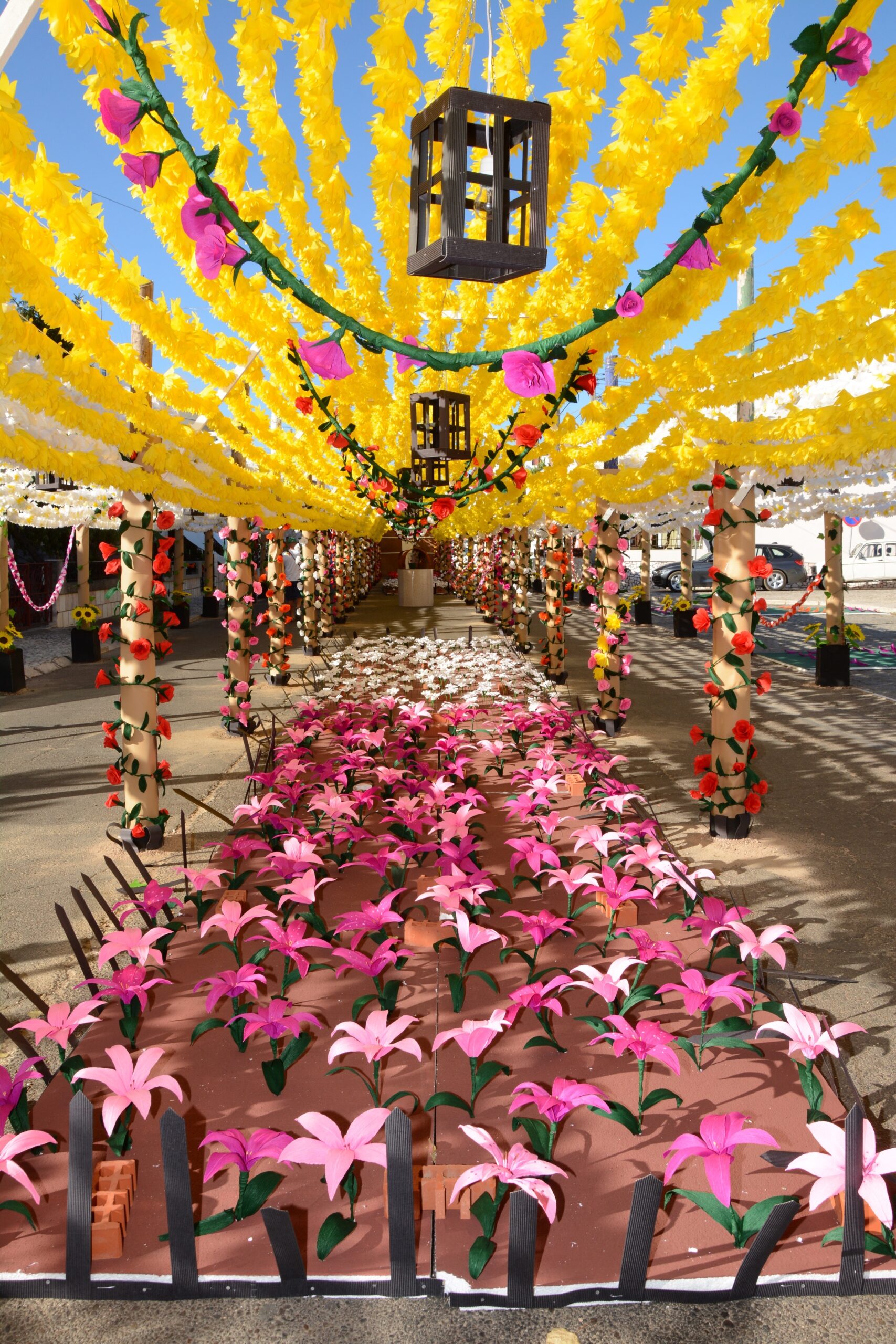
Long evenings spent making flowers in the greatest secrecy
Vanda Portela misses the festivals, but she also greatly misses what happens before the festivals: “On the day visitors start to arrive, there is that excitement of showing our work, seeing what others have done, having the whole town decorated. It is an enormous satisfaction. But for us, the festivals started a long time ago.”
We could almost say that “as soon as one festival ends, people immediately start thinking about the next one.” The street leaders use the festival days to see what went well and what went wrong, and to start “noting down ideas” straight away. Before long, they are already sketching plans, even without knowing for sure when the next edition will take place. “Right now, if we go and speak with the street leaders, I am sure that all of them already know what they are going to do next year,” says Vanda Portela.
Each street can have one or more street heads. This is the person responsible for bringing residents together, representing them, and managing the whole process. “It is necessary to make a plan, a drawing, with what is imagined and then understand how the ideas can be put into practice, what type of structure will be needed depending on the street’s architecture, define the model of the gateway, the shape of the arches, the amount of paper that will be needed, the materials that must be requested… These are quite complex calculations. The older residents have all this recorded and it is passed on from street head to street head. It is a very big responsibility. The street head must distribute tasks among all residents, go to the association to request materials, and take part in the meetings that organize the festivities.” They must anticipate difficulties and then solve problems when they arise.
The manual work itself begins months before the festivities. “Ideally, in January or February we should start work straight away. People begin making flowers around that time, and it is never too early,” says the president of the Association. The people of Campo Maior gather in one another’s homes, sometimes in warehouses or garages. In between conversations and laughter, they create the delicate and increasingly creative paper flowers. This has traditionally been women’s work, while the men take charge of building the structures, painting, and electrical work. “We always make use of each person’s skills. If you are better at cutting, you will cut the paper. If you know how to assemble flowers, you will assemble flowers. If you prefer painting, you will paint.”
Children also take part. “When we were little, we all watched the evening gatherings and started by doing those simple tasks, the twists to make flowers or to cover wires, for example,” explains Vanda. There are cases of people who come from other streets, either because they were born there or have some connection to that street, or because they live on a street that does not take part. They are all welcome. As long as they are trustworthy. “Everything is done in great secrecy. It is one of the essences of the festival. No one from outside the street can know what it will be like.”
On the night of the enramação no one sleeps in Campo Maior. “It is total madness. Everyone goes out into the street and, as soon as night begins to fall, the secrets start to come out. Usually under the baton of the street leader, who says how many bows, how many ropes, what the entrance is like. Everything is done meticulously.” The town wakes up completely decorated.
Vanda Portela explains: “One of the characteristics of our festivals is that the public space becomes private: it stops being ‘a street’ and becomes ‘my street’, with its own entrance and its own decoration. When people enter the street, it is as if they were entering my home. On the other hand, what is private becomes public: we open our front doors, we place tables and chairs in the street. There is a great deal of sharing. Because we truly like to welcome everyone and show them our work.”
At this point, the president of the association is already thinking only about 2023: “If the people want it, there will be festivities.” And she adds: “It is a lot of work: many hours, much dedication, sometimes a few annoyances, because there are many people. But then everything is forgotten.”