
A little creativity and a will to innovate are enough to create truly sustainable, circular businesses and projects that not only respect the environment but also help it regenerate. The following examples, within and beyond Delta, are proof of this.
Matter. The alchemy of sustainability
An innovative startup from Porto gives waste from essential products, such as coffee, chocolate, olive oil, and wine, a new life in architecture, design, and packaging. Besides Delta, IKEA, Louis Vuitton, and Chanel have also been won over by Matter.
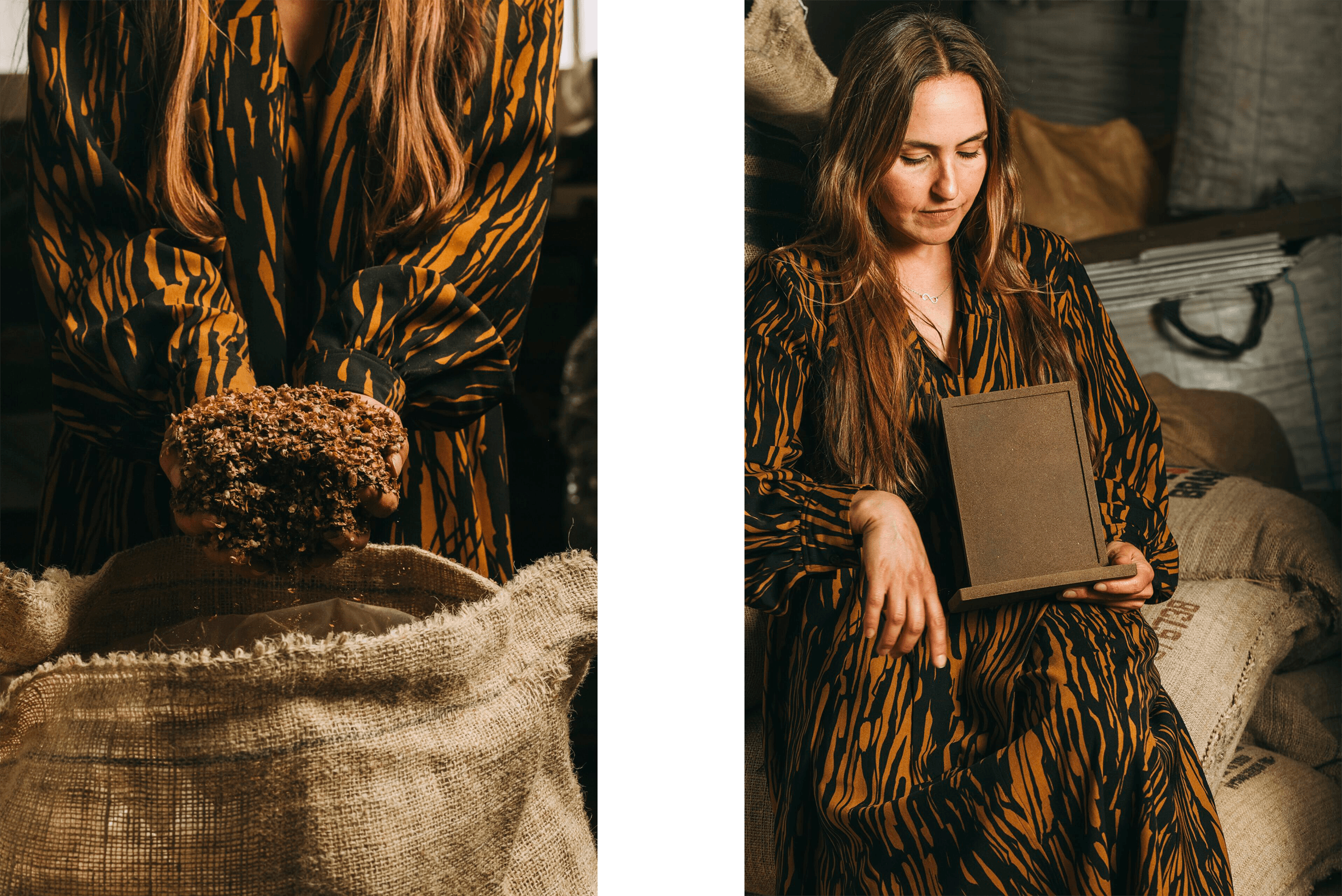
In the Middle Ages, our ancestors placed all their hopes in Alchemy to fulfil the dream of turning common metals into gold. Many centuries later, only 41 years ago, Ana Lima was born, an architect who also chose to study biochemical engineering with the aim of transforming waste into what, for her, is gold: materials.
This is the guiding principle of Matter, a startup based in Porto that uses production waste from coffee, chocolate, olive oil, and wine, and turns it into value-added products with applications in architecture, packaging, and design. The selection focused on products “that we consume in our daily lives and that are connected to our culture,” explains Ana, who began her research in 2012.
“I have always been completely passionate about materials”
After a friend showed her olive oil waste that was being thrown away, Ana decided to pursue a PhD to study how to avoid this waste, preferably while creating more original material to apply in architecture. Today, Matter produces cladding panels in different colours, shapes, textures, and scents, which can be used in construction and interior design, on floors, walls, or ceilings, for example. “We are creating our own furniture and design brand,” she adds, following the win in the “INOVDESIGN” competition of Fundação de Serralves in 2018.
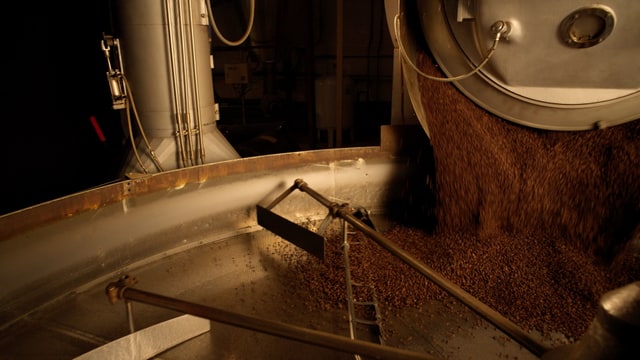
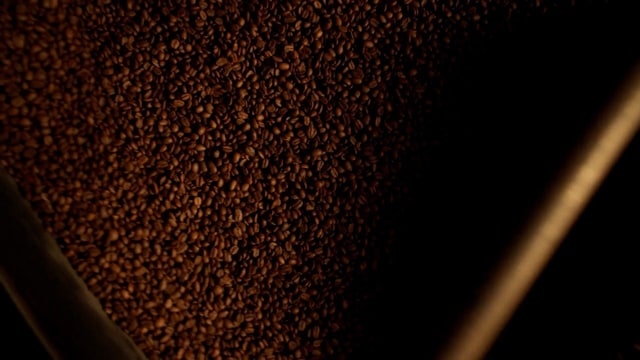
But that is not all. In 2019, when she heard about the DisrUPtion program from Grupo Nabeiro, she applied with the goal of studying Delta’s waste, from the chaff released in the coffee roasting process to the filter paper found in the capsules. “Shaping these materials is opening up very interesting possibilities for us. The commemorative trophies for Delta’s 60th anniversary, for example, are made with roasting waste.”
National and international awards have shaped the path of this startup, leading to invitations to work with some of the largest brands in the world. The first prize they won was in Spain, when Matter was not yet, officially, a company. “Since then, we have always kept one foot abroad.” In the middle of the pandemic, they were finalists for the LVMH Innovation Award, from the giant Louis Vuitton, which earned them an invitation to the Maison des Startups in Paris. For six months, they were in contact with different companies, including those in the champagne industry, and they are currently exploring partnerships with four brands. Before that, they had already been approached by Chanel. “They learned that we were working with wine waste and, for a launch event for their wine collection in Tokyo, they used as a support the material that we make with grape stems.”
In 2017, Matter was one of ten startups worldwide selected for an IKEA program in Sweden. The three months of research produced several conclusions and brought major benefits to Matter’s daily work, recalls Ana Lima. One of these conclusions concerns scale. “We want to be where the waste is, but in small factories, not in large multinationals,” where they feel they can start to drive the change the world needs. “When I immersed myself in waste, I realised the madness the world is living in: the amount of virgin resources we use is unbelievable and makes no sense, because there is a whole universe of material that can be reused. We only have one planet, and industries must be open to changing their procedures.”
Cucumbi. The hotel of native breeds
The dream of Tozé and Catarina França is to create an oasis in Alto Alentejo, with abundant water, endangered Portuguese breeds, and organic farming that will make this rural tourism self-sufficient. Give them 25 years and they will make it happen.
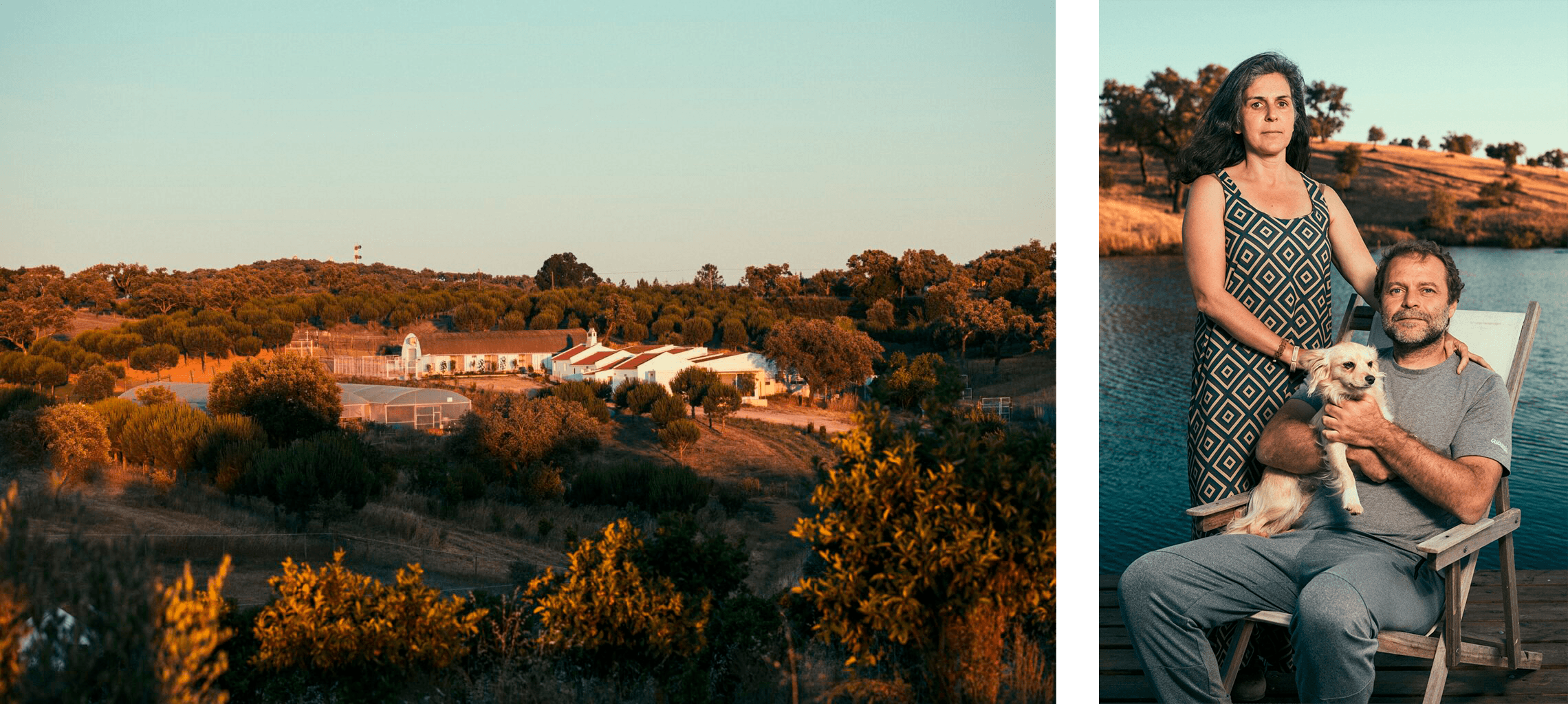
Here, tourists do have comfortable accommodation, but the animals receive luxury treatment. “My sheep [white and black merino] listen to classical music,” says Tozé França. The henhouses, home to pedrês and the yellow, white, and black Lusitânica breeds, have a water treatment system, a kind of private ETAR, as well as four thermal layers in the roof. “My dream is to build a temple for Portuguese native breeds,” explains this recent farmer. If rural tourism Cucumbi is an altar, with these gods and saints roaming freely across land divided into 31 different paddocks, the tourists’ role is to relax and honour these divinities.
Catarina França, the woman, still says she belongs to the city – perhaps it is the strength of four decades living an urban life. But then she looks around and concedes: now she is in the middle of orchards, chickens, and the two Miranda donkeys, and this is where she is and where she likes to be. The idea of buying the farm from Catarina’s father came from Tozé. “The family had no idea, and I was already negotiating with my father-in-law,” he says with a laugh, proud of a roguish but successful plan.
Designing an agroforestry project in Alto Alentejo is not cheap, the couple who run this organic farm warn. There is a kind of “cheerful impoverishment”, especially when you plant for the future. The three hundred trees that have been planted (including cork oaks and fruit trees) will only give shade to the grandchildren. Organic farming carries risks and losses, and native breeds are not as productive as others. On top of this, there is an ambitious plan to turn this estate into an oasis within 25 years.
From the terrace where meals are served to guests, Tozé stretches his arm toward a valley: “One of the ponds will be there,” he announces, and assures that they will be spread across the land everywhere. To the right of the buildings, between the valleys of the property, there is already one as a sample. “It is necessary to understand the land. We have a road there that has to be cleared every year,” continues this man who spent the last years in business between Portugal and Angola, none of them related to the countryside.
“The land does not want the road there. With this [regenerative design] project, we already know where the road has to pass, and this way we may not need to keep clearing it all the time.”
The family’s investment is gradually balanced by tourist accommodation. The works for the four rooms and three apartments preserved the building of the farmers’ houses of the cooperative that operated here until the 2000s. Many of those who live in the village, at the end of the street, were born here, and for Tozé and Catarina the connection to the community is part of the idea of sustainability. “When we arrived here, in June 2019, I immediately signed up for the recreational society,” says Tozé. It was good for getting to know some of the people who now work at Cucumbi: Custódia only looks after the chickens; Gregório is in the vegetable garden; Luís, with the sheep.
The couple and their children are gradually absorbed by the countryside, but they still need these guides. “In the first year,” Tozé recalls, “I felt illiterate. I walked behind the shepherd to see how he did things.” There is time to keep learning, because farm work lasts 365 days a year.
Delta × Prio × Ecobean. Where there is smoke there are coffee grounds
Coffee waste can become energy. For the general public, the most visible part of the partnership between these three companies will be the briquettes, but this work aims to go further and turn used coffee into biodiesel.
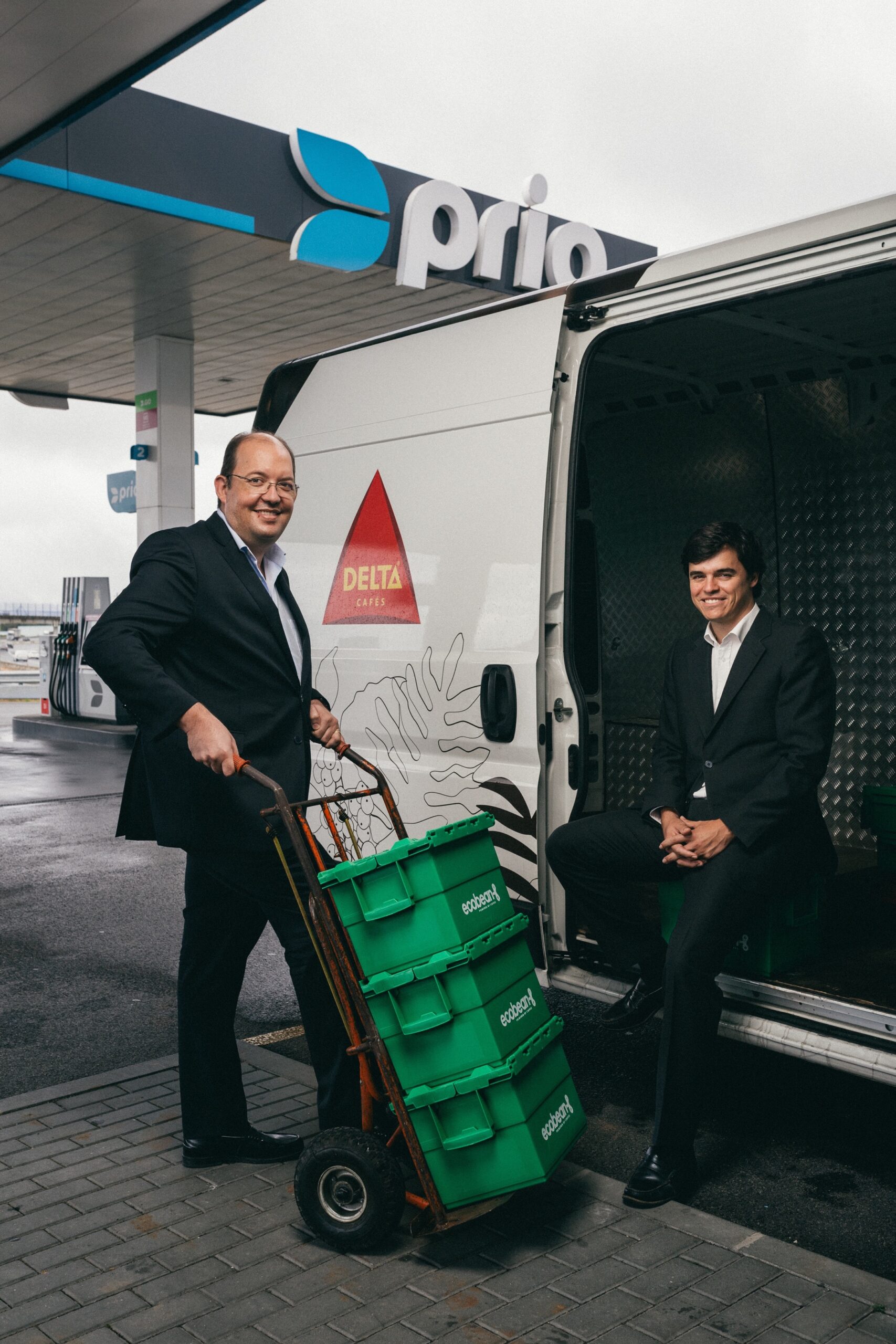
Questions are legitimate. Coffee has not, until now, belonged to the world of grills and barbecues, but Marcin Koziorowski assures that no one will eat meat with a coffee aroma. After being served with and without sugar, in espresso and long coffee cups, cold or scalding hot, Delta coffee grounds now form briquettes for barbecues, in a pilot project by Prio with Ecobean, a Polish company whose mission is to give them a new life.
The much‑appreciated smoky smell on meat or grilled vegetables was not left out of the recipe formula for these briquettes. They are 80 percent coffee grounds and 20 percent wood waste with a natural binding compound. The star is the grounds, which thus live their second life, but only “the nose of a very experiencedsommeliercould pick up the coffee notes” when lighting the fire, says Marcin, CEO of Ecobean.
As an alternative to charcoal – which involves higher carbon dioxide emissions – these briquettes promise to produce more heat and for longer, all because of the coffee oils. “We are always looking for more sustainable solutions through, for example, greater incorporation of oils extracted from residual raw materials, and we have long known that there are oils that can be extracted from coffee,” says Emanuel Proença, board member at Prio. The Aveiro brand is known for its fuel stations, but a large part of its work lies in converting oils that would be released into nature into biodiesel. Any oil has potential for this: Prio already collects cooking oils or oils from agri‑food industries and, at this moment when it is clear that the future does not lie in fossil fuels, there is a need to investigate more deeply. From this exploration comes the relationship between Prio and Ecobean, and both state with confidence: the grills and fireplaces that these coffee grounds will light are only the tip of the iceberg.
“We are gathering all the information on how to add coffee oil in biodiesel production so that we can later try to industrialise the process,” explains Emanuel. Marcin has no doubts about the potential of this and other raw materials:
“We recover 100% of coffee grounds into oil and briquettes, and we are also developing processes to recover the solid fraction into other products with higher commercial value.”
Delta joins this partnership because it is present everywhere in the coffee world in Portugal and because of its vision for sustainability. Prio stations were already using Delta coffee, so the connection was natural, explain Dinis Cunha [Director of Sales for International Markets] and Maria Miguel [Project Manager], who remain involved in this pilot between Lisbon and Campo Maior. For now, coffee grounds are collected from customers and from the company itself at six Prio stations in Lisbon, the same locations where the first briquette packages will be on sale this summer, still as a test to understand public acceptance. And the public likes coffee. “Although Portugal has a quarter of the population of Poland, it has double the per capita coffee consumption,” says Marcin, who dreams of a coffee biorefinery in Portugal: “To recycle all the coffee grounds from Delta: that would be a dream.”
Porcus Natura. The pigs that come from the grass
At Herdade de São Luís, in Montemor-o-Novo, two generations have been transforming the breeding of porco alentejano. Thanks to regenerative management techniques, the livestock farming practiced there is becoming increasingly environmentally friendly.
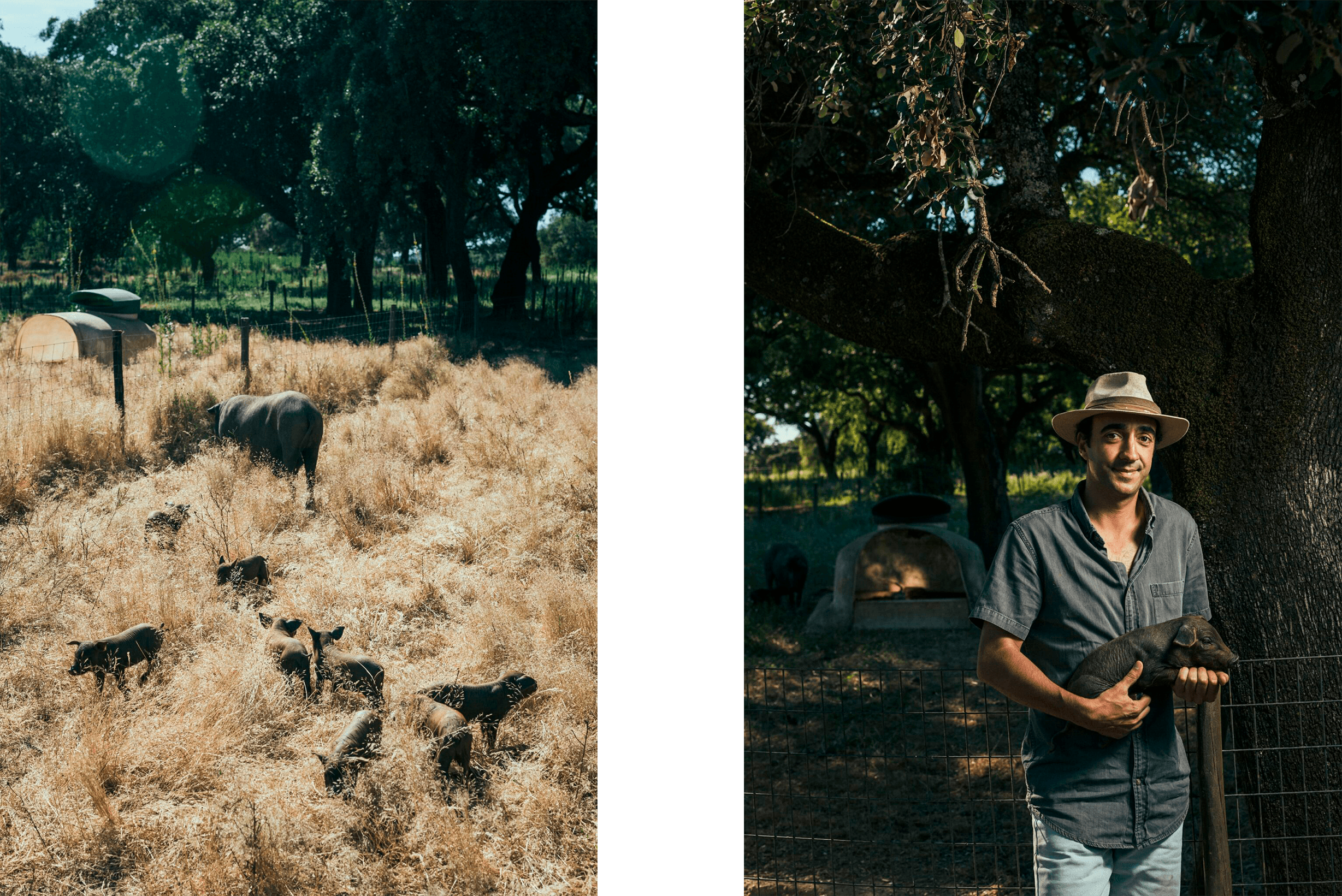
On his 700 hectares of land, Francisco Alves has 4,000 pigs, but he presents himself as a grass producer. While the fields stay green and the grass grows on its own, without needing to be sown, everything is in balance at Herdade de São Luís, near Montemor-o-Novo. It is the clearest sign that the soils are strong, and that the account with the environment — between the meat produced, the gases emitted, and the carbon captured by the vegetation — is settled. This is the philosophy of regenerative management that, at Porcus Natura, gives rise to some of the best Alentejano pork in the country.
As soon as he welcomes someone to the estate, Francisco leads visitors to what makes him proud: the piglet maternity units. They are the legacy of another Francisco Alves, his father, who designed these unique facilities 20 years ago. Even today, professionals from the field visit them as an example of animal welfare.
Each sow and her litter of six or seven piglets have a kind of private yard, with a shaded shelter where they sleep. “My father realised that if they stayed in a small space, the ground was quickly worn out,” says Francisco. Now there is enough space for the piglets to run under their mother’s watchful eye; she comes here in the last weeks of gestation. She feeds on the grass and, at the peak of exhaustion, has a feeder with cereals.
And the tiredness must not be small. When they want to suckle, they all run at her together and it is impossible to tell whether they throw her down on the mat or whether she simply recognises the uselessness of resisting and lies down. “The one at the back teat is always the skinniest,” says Francisco, as he points to the most frail one. It still has two months to put on weight and prepare for the walks from field to field, running through all the pastures, until it reaches the last one for an acorn-based feed that will make the recognised difference in this meat: high fat marbling in the muscles and levels of oleic acid – the so‑called good fat – higher than those of olive oil, the producer assures.
After the father’s groundbreaking work, the son is also leaving his mark. About five years ago, he came across holistic and regenerative grazing for the first time. The idea is that the animals act as the land’s own ploughmen and farmers. Since each animal has a different role, Herdade de São Luís also has cows, Merino sheep, and Serpentina goats.
The pigs move from plot to plot, turning over the soil. They “have the natural instinct to root”, which avoids mechanical ploughing that breaks the soil structure. Like the cows, they eat a first layer of grass and are then taken to another field before eating the second layer, so that it can flower, set seed, and grow again. The sheep eat dry grass or, as Francisco says, turn dry grass into kilos of meat, while the goats do everyone a favour by eating more or less anything and helping to clear the land.
On these journeys through the montado, the animals fertilise the soil. This happens because chemical dewormers and pesticides are avoided. “We only treat an animal when we see that it is ill. Many people deworm them every year, as a routine, but that destroys the animals’ gut flora and they stop producing productive biomass,” explains Francisco. The montado and the Alentejo pig, as we can see, have the situation under control. There is no need to invent much.
Delta Évora. A giant powerbank
From Alentejo come news from the future: it will be possible to work with an entirely electric fleet, generate the energy to charge it, power a department, and, along the way, still give another ten years of life to lithium batteries previously used in cars.
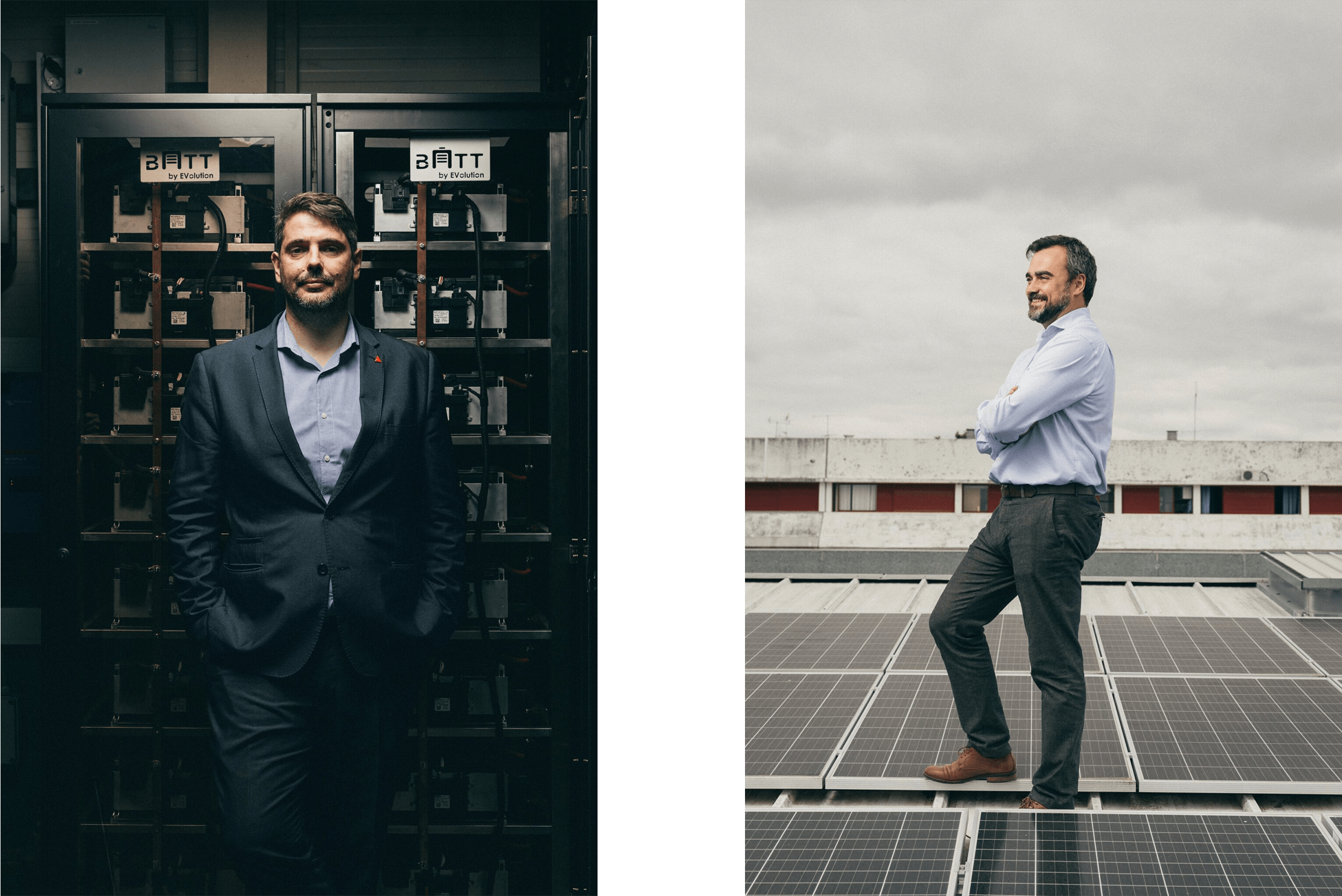
There is so much sun in Évora that the daily activity of Delta’s local department is not able to consume all the energy it produces in a single day. Half of the roof is covered with solar panels and, in the parking spaces, you can see a 100% electric fleet. From above, it is easier to understand why this department is rare: in the industrial area of the Alentejo city, solar panels are still unusual coverings. And in the Delta universe, this is still – for now – the only vehicle fleet powered entirely by clean energy.
Even more remarkable than this are the two simple cabinets stored in the facility warehouses: they are filled with old batteries from electric cars that store the surplus energy produced by the solar panels. It is an innovative solution that improves the building’s energy efficiency, reduces costs, and offers a small but concrete step toward a potential answer to the challenges of lithium battery production.
“We faced the challenge of electrifying the entire fleet, but even with all these panels, the [grid] electricity consumption was growing significantly,” explains Nuno Damião, head of the strategy and development team. Choosing electric vehicles in this district was a real test, because of the long distances to reach customers. It was confirmed that it is possible to use 100% electric cars if there is good management, and so the company began to offer eco‑driving courses – even for those who do not have an electric vehicle. “The important thing is to change our mindset,” says the coordinator.
The balance between the energy generated and the consumption and charging of cars and forklifts involves factors such as the hours of strongest sunlight or the number of chargers. Even with careful management, a large amount of solar electricity that was not consumed during peak light hours was wasted or sold to the grid at symbolic prices. “The idea was to store this energy in a powerbank to use later,” explains Nuno Damião. They put the challenge to Zeev, which develops electric mobility solutions, and to BMW, which supplied used lithium batteries.
“It is remarkable that these batteries can have at least ten more years of life here,” says Duarte Azinheira, department director, standing next to the unit with a capacity of 40 kilowatts that powers the building – use of grid energy is already secondary. Lithium extraction, the short service life of batteries in cars, and their disposal in the environment are the problematic side of electric power, and any solution that extends the life of these units makes the environmental balance more positive.
In the department warehouse, they are easy to overlook, but these boxes have changed the pace of Delta in Évora. On a screen in his office, Duarte sees in real time the energy production and which electricity is feeding consumption. From there, he asked for changes in everyday habits. “Now we charge the forklifts at night, making use of the stored energy, and the cars at lunchtime, when there is less consumption [in the warehouse and in the offices] and a peak of sun,” he explains. At that time of day, it almost seems as if there are not enough batteries for the generosity of the Évora sun.
Naturhortas. The Airbnb of vegetable gardens
With the onset of the pandemic, a couple from Sintra left the accessory behind and dedicated themselves to what will always be essential: vegetables grown without agrochemicals. They inspired their neighbours and today they manage a network of micro-gardens in the Lisbon district.
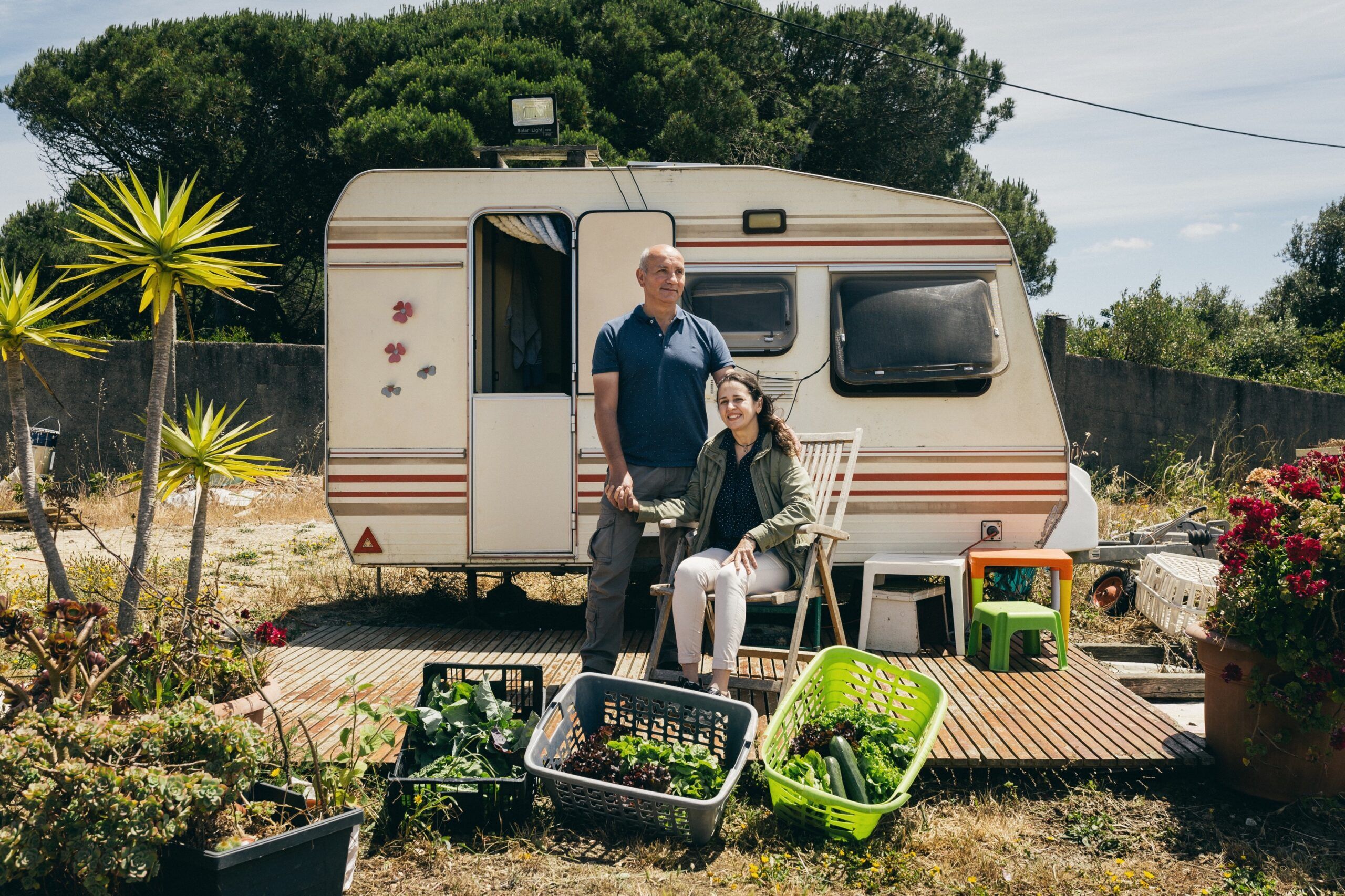
The work turned out to be perfect for anyone who likes snails – but this couple did not. One early morning, when the snails had moved so much that no one could accuse them of being slow, Rui and Marília collected five kilos of them in their yard, a record. “If there is not a snail, a caterpillar, something out there, something is not right,” says Marília. Asking for a caterpillar as a certificate of a more-than-organic vegetable garden is one thing; quite another is five kilos of gastropods trying, in a single night, to gnaw through weeks of production. That is what you call a plague – and since the Borralho couple do not use even the few agrochemicals accepted in organic farming (such as lime, for example), they had to deal with them one by one, by hand.
NaturHortas is, as has been said, more than organic. This network of gardens was founded by Rui and Marília Borralho when, and because, the covid-19 pandemic hit them hard. Now, they work with more than 20 partners and have hundreds of gardens that want to be part of this project, which brings inactive land back into sustainable production.
“Our goal is to be able, at any moment, to pick anything from the garden and put it straight in our mouths.”
He states this to explain the restriction on the use of any type of agrochemical. In addition, training is required to apply any agrochemical, and this network is made up mainly of non-professional farmers, taking their first steps in their rubber boots.
This was, in fact, the situation of Rui and Marília. They had just made a major investment in local accommodation in the Sintra area. “The whole of 2020 was fully booked and, suddenly, guests started cancelling reservations,” says Marília. We know the rest of the story. “We started growing food just to put meals on the table; even that was at risk,” adds Rui. The courtyard is small, with one half taken up by the chicken coop of Portuguese breeds, Rui’s great passion. “What if we asked the neighbour for his backyard?” Marília asked one evening. It was one of those throwaway lines, but it kept echoing and ended up leading somewhere. Shortly afterwards, a business idea emerged.
After the first neighbours gave up their small plots, others came forward with larger, previously unused areas, and this made it possible to create the NaturCabazes for sale in the Lisbon district. The couple soon stopped doing the farming work and moved into management roles.
The real farmers are the landowners, who keep 30 percent of the production for their own consumption and sell the rest to NaturHortas, or those who do not have their own plots but want to work the land. In that case, Rui and Marília act as a bridge between farmer and owner. “We want to be the Airbnb of vegetable gardens,” Rui sums up.
When they arrive at each plot, they bring the list of what the customers ordered – courgettes, cabbages and green beans always go out, but they encourage people to grow rarities. “We have been thinking about planting okra,” Ricardo Ferreira tells them, shortly after welcoming them to his vegetable garden. He is a lorry driver and his wife, Raquel Molarinho, is a visual arts teacher. They already think only about retirement, so they can devote themselves fully to the land.
The visits serve to verify that each edible garden follows NaturHortas’ production rules, and people exchange remedies, such as onion and garlic paste to get rid of aphids, or carnations planted here and there to keep certain pests away. In the end, there is still harvesting, weighing, and paying these micro-farmers – they have no refrigeration systems; everything is picked directly for delivery. “We sell freshness,” says Rui. When it is time to cut, Raquel does not give anyone else a chance. After so long caring for the plants, there is no way she will put the scissors in someone else’s hands.
Re-coffee. The new coffee grounds
Rui Monteiro was a student when he looked at a cup and saw much more than a good coffee. From the coffee grounds, he discovered how to make 100% sustainable footwear and created Re-Coffee, a project by young entrepreneurs who believe in slow fashion and a greener tomorrow.
“The idea came to me while I was having a coffee.” The sentence, common to so many creative moments that change history, is especially fitting when that idea is directly related to what Rui Monteiro had on the table. At the time a Materials Engineering student at Universidade do Minho, he decided to ask the owner of the café in his hometown, in Famalicão, how much coffee grounds were left over there each day – six to seven kilos. “I started to think: if I collect the coffee grounds from an entire city, can I turn them into a higher-value product?”
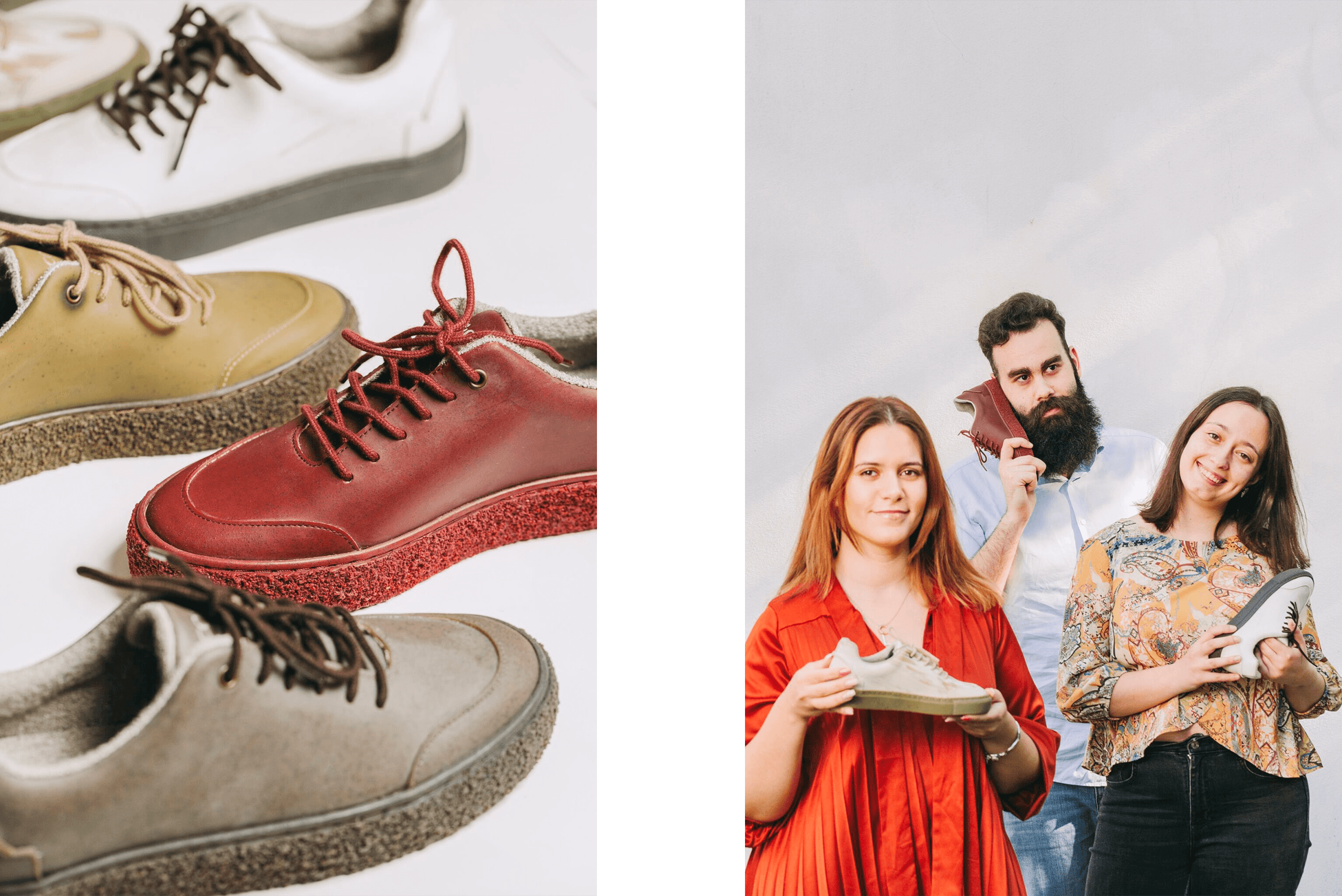
Three years later, we sit at another table, now in Braga, with Rui Monteiro and the added value that came from his mind: Re-Coffee, a startup that, in partnership with Lídia Leal and Kátia Pereira, presents a line of sustainable footwear, with eco sole and coffee leather, a material made from coffee grounds and recycled rubber, using surplus from the footwear industry itself. They called it Kaffa, the name of the birthplace region of coffee, located in Ethiopia.
The line currently has seven colors, and each model has a name linked to coffee – red velvet, for the red of the coffee cherry, coffee, dark coffee, latte machiatto, latte pingatto, caramel, up to matcha, the green drink that also contains caffeine. The models have a unisex look, but are offered for men and women, taking into account the different ergonomic needs of the foot.
Reaching this point took time, with “many setbacks along the way”. Still without knowing what he could create with this waste, Rui began collecting it in cafés and restaurants and started his research: cleaning and removing moisture from the grounds at home, mixing them with other materials, carefully balancing Arabica and Robusta coffee grounds, whose colours differ, and finally testing the idea at a footwear components company, Bolflex, in Felgueiras, where the materials that make up Kaffa are produced today. The insole and lining of each sneaker contain natural coconut fibres and recycled polyurethane, for greater comfort and cushioning of the foot. “I make a point of only using materials not tested on animals,” Rui adds.
Each pair is made with the grounds from about 25 espressos, depending on the size of the sneaker. In addition to reusing coffee grounds and using recycled material to create the footwear line, Rui Monteiro closes the loop by making Kaffa recyclable. “We invite customers to return their sneakers to us after use, and we offer a discount on a second purchase. We can turn these sneakers into coffee-scented panels that can be used in interior decoration or in a playground, for example.”
Currently, sales take place on the Re-Coffee website. The goal is to bring in partners where the brand can be sold. More than in shoe shops, Rui would rather see his creations on sale in iconic cafés across the country, and also have his own space that combines production and direct sales to the public. At the same time, Rui, Lídia, and Kátia are working on diversifying the collection. In the future, it will be possible to wear Re-Coffee from head to toe. “We want to have a children’s footwear line, bags, backpacks, accessories, even clothing, always with coffee as the core element,” says Lídia. “But we always call for conscious consumption,” adds Kátia.
More than selling a new product born from waste, Re-Coffee calls on customers to make a considered choice, following the concept of slow fashion: to consume durable fashion that respects the environment and the communities involved at every stage of production, reducing the creation of waste. Beyond customers, Rui Monteiro also wants to raise awareness among other materials engineers like himself so that they follow in his footsteps, with or without Kaffa on their feet. Who knows what waste is still waiting for a new life.